
City wastewater staff defend biosolids land-application program, note monitoring and storage limits
Get AI-powered insights, summaries, and transcripts
Subscribe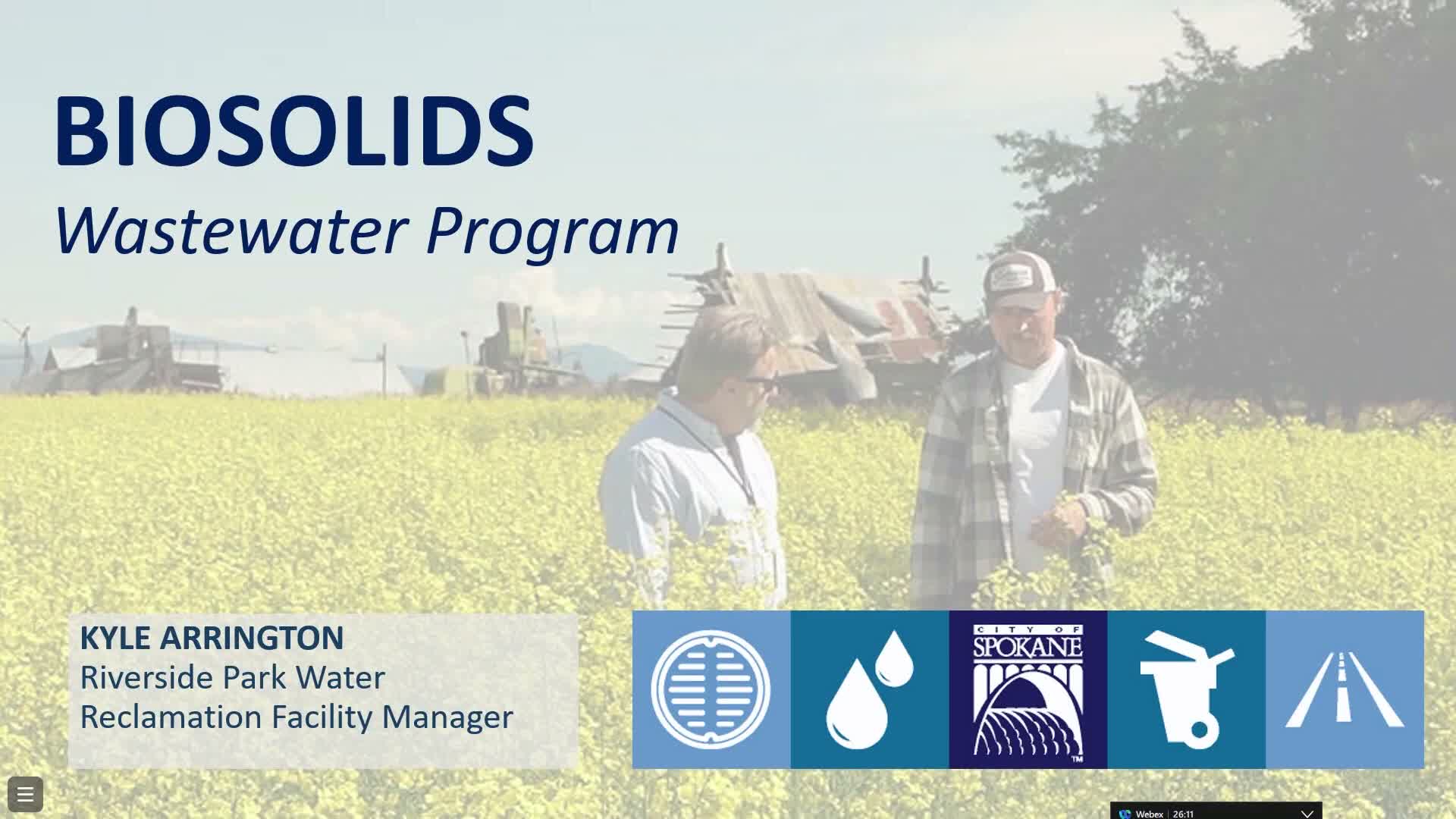
Summary
Riverside Water Reclamation Facility staff outlined the plant’s biosolids program, its regulatory history since 1982, routine lab sampling and land‑application practices, and identified storage capacity and emerging contaminants (PFAS, pharmaceuticals) as ongoing concerns.
City wastewater staff presented a high‑level overview of the Riverside Water Reclamation Facility’s biosolids program to the Public Infrastructure and Environmental Sustainability Committee.
Kyle Arrington, Riverside plant manager, described the treatment path for solids — screening, settling, digestion, dewatering — and said the plant has applied treated biosolids to agricultural land in the Spokane region since about 1982. Arrington said biosolids are analyzed extensively and that the program adheres to state requirements and a Washington State general biosolids permit (transcript reference). He noted the city also tracks those activities under the facility’s permit and sampling regime.
Arrington said logistically the program coordinates closely with farmers, seeks flat fields away from water and wells, and evaluates each site for slope and setback constraints. He emphasized that biosolids are not raw sewage but a treated soil amendment and described benefits including nutrient recycling, reduced runoff and improved soil water retention. He said there are no recorded sicknesses tied to the program among workers or the public in the plant’s experience.
At the same time, Arrington acknowledged program limits: storage capacity is constrained (material usually goes to fields as soon as it is pressed), winter timing and incorporation can complicate operations, and emerging contaminants — including pharmaceuticals and PFAS — remain an area of active monitoring and research. Council members asked whether biosolids are sold; Arrington said the plant currently recycles biosolids with partner farmers rather than selling a refined product but said refinement to a drier, salable product might be a future possibility.
Council members and staff discussed site evaluation criteria (maximum slope, setbacks from wells and water) and the value of continuing outreach to address public perception issues. Arrington and staff urged continued research cooperation with universities and regional biosolids research groups to stay current on emerging contaminants and safe‑use practices.