Get Full Government Meeting Transcripts, Videos, & Alerts Forever!
Get email alerts on the Ems Fleet topic
No spam. Unsubscribe anytime.
Newberry County staff seek two ambulances, curb out‑of‑county low‑acuity responses to keep resources local
Summary
County staff asked council to fund two ambulances and to stop answering low‑acuity calls outside Newberry County so crews aren’t pulled from local coverage; council members requested fleet details and data to inform budget decisions.
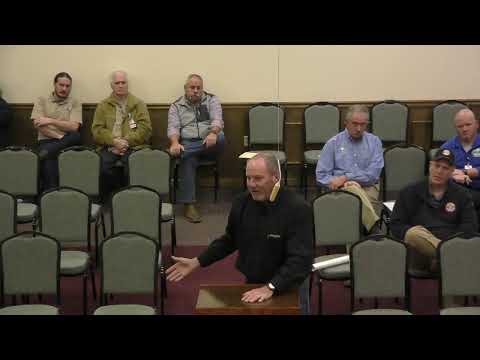
Unidentified Speaker 1, a county staff presenter, told the council that Newberry County’s ambulance fleet totals eight vehicles, four with more than 200,000 miles and two with over 250,000 miles, and that the county has requested two additional trucks in the coming budget cycle to maintain a manageable replacement plan. “If we don't get two trucks in this upcoming budget cycle, you will have to get two trucks in the next budget cycle, and they never get cheaper,” he said.
He also urged removing supervisors from frontline ambulances so they can perform compliance and accountability duties, saying the county is “the only county in the Midlands area that still has our supervisors on the truck.” As an operational change, the presenter said county policy now limits mutual‑aid responses: “we aren't responding to any low acuity calls outside of Newberry County to keep those resources here for our citizens.”
Why it matters: County emergency medical services are operating with aging vehicles and thin spare capacity, and pulling ambulances to assist neighboring jurisdictions on low‑acuity incidents can reduce local coverage. Changing mutual‑aid practices and adding apparatus are immediate levers to preserve response capacity.
Council members pressed for more detail. One asked the model years of the high‑mileage units and how long it took them to reach 200,000 miles; the presenter said he would provide a fleet list and explained that replacement planning should weigh both vehicle age and mileage. He cited manufacturer guidance noting idle hours can accelerate wear — “for every hour of idle time, it’s equivalent to an additional 20 miles traveled” — and estimated some ambulances could effectively have 350,000 equivalent miles when idle time is included.
What’s next: The presenter offered to supply the requested vehicle list and replacement timing to inform the budget process. Council members signaled they want to review the submitted data before making a final funding decision.
Adjournment: After additional presentations and public comment, the council approved a motion to adjourn by voice vote.