
Gilroy council approves 90-day suspension of enforcement for 6th Street encampment, continues sanitation
Get AI-powered insights, summaries, and transcripts
Sign Up Free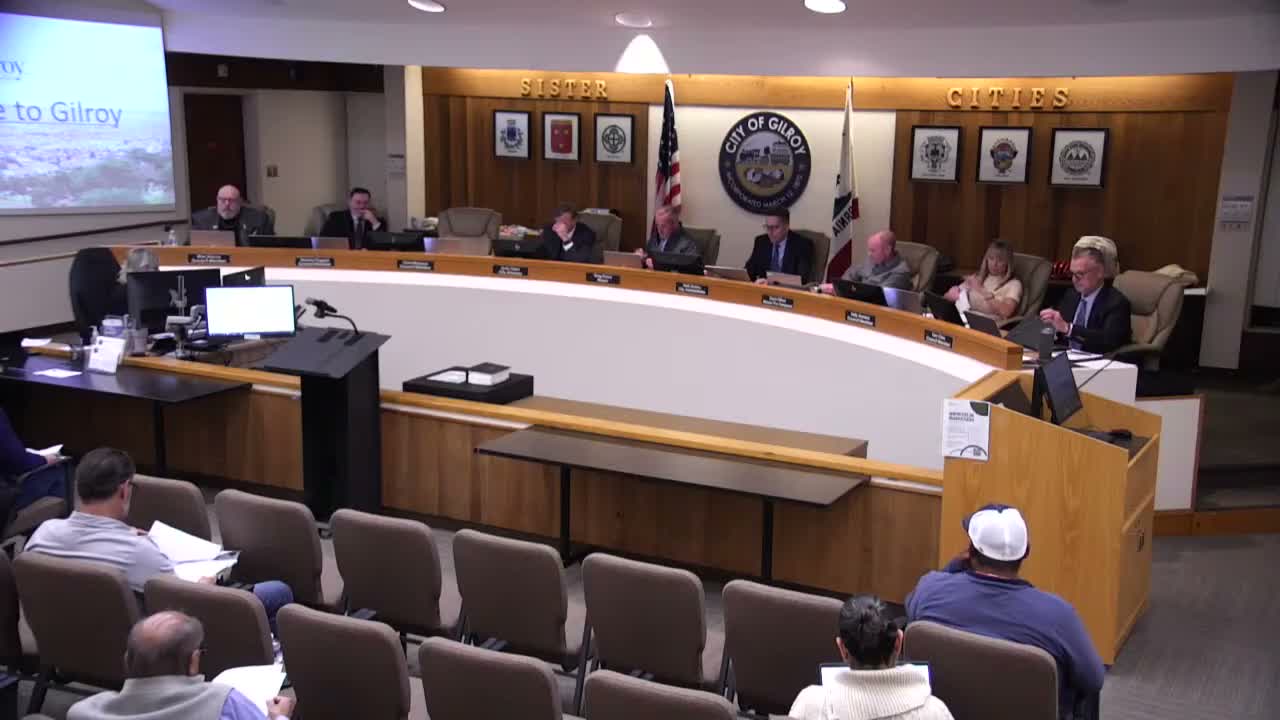
Summary
After extended public comment and staff briefings, the City Council voted 4–2 to temporarily suspend enforcement of Chapter 5 at the 6th Street encampment (Camp Hope) for up to 90 days, authorizing continued portable-restroom and trash services and allowing the city administrator to end the suspension early if health or safety risks increase.
The Gilroy City Council voted 4–2 on Feb. 10 to adopt a resolution suspending enforcement of Gilroy Municipal Code Chapter 5 at the 6th Street temporary encampment for a period not to exceed 90 days and to continue city-provided sanitation services during that suspension.
City staff told the council the site was authorized as a short-term humanitarian relocation on Nov. 15, 2025 and currently houses approximately 20 individuals. The staff report noted the location is adjacent to a bicycle and pedestrian path and lies within areas restricted under Chapter 5. Staff presented two options: immediate abatement, or a temporary suspension of enforcement up to 90 days to allow more time for housing navigation and outreach.
“Option number 1 is immediate abatement. Option number 2 is temporary suspension up to 90 days,” staff said during the presentation. The report added that most occupants are enrolled in the county entry system, with one moved into the Ochoa shelter and six in the process of moving to interim housing.
Community speakers and nonprofit volunteers urged the council to allow the encampment more time, saying remaining in a single location helps outreach workers and housing navigators work with residents. “Allowing us to remain at Camp Hope is not only the most humane choice, it’s also the most practical and cost‑efficient option while long‑term solutions are developed,” said Gabriel, a Camp Hope resident.
But several nearby business owners and residents described impacts around the site, particularly near a major retailer. “They don’t like it there,” one community speaker said after relaying conversations with the store manager; council members also described photographs and reports of pallets, fencing damage and trash from nearby areas.
Council members weighed liability and precedent. City Attorney Andy Faber said discretionary timing of enforcement generally does not create city liability but cautioned that routine claims arising from use of city property remain possible. Police and public-works staff estimated the site has required about three hours per week of quality-of-life/patrol time and that the city pays roughly $420 per month for portable restrooms.
Mayor Bozzo said the suspension is an exception to the city’s ordinance, not a change to the law, and added the resolution would let the city continue sanitation and outreach while preserving the option to abate if conditions deteriorate. The roll-call vote was Bracco: yes; Klein: yes; Fugazi: no; Hilton: no; Ramirez: yes; Mayor Bozzo: yes.
The resolution also authorizes the city administrator to terminate the suspension earlier if increased risk to public health or safety is identified. Staff said it will continue coordinating with county and nonprofit partners during the pause and that abatement remains the default absent explicit council direction.
The council’s action leaves the site subject to future review; staff said any abatement would be coordinated with outreach and notice consistent with law.