
House Committee hearing flags security risks, conditions for U.S. support amid Syria transition
Get AI-powered insights, summaries, and transcripts
Subscribe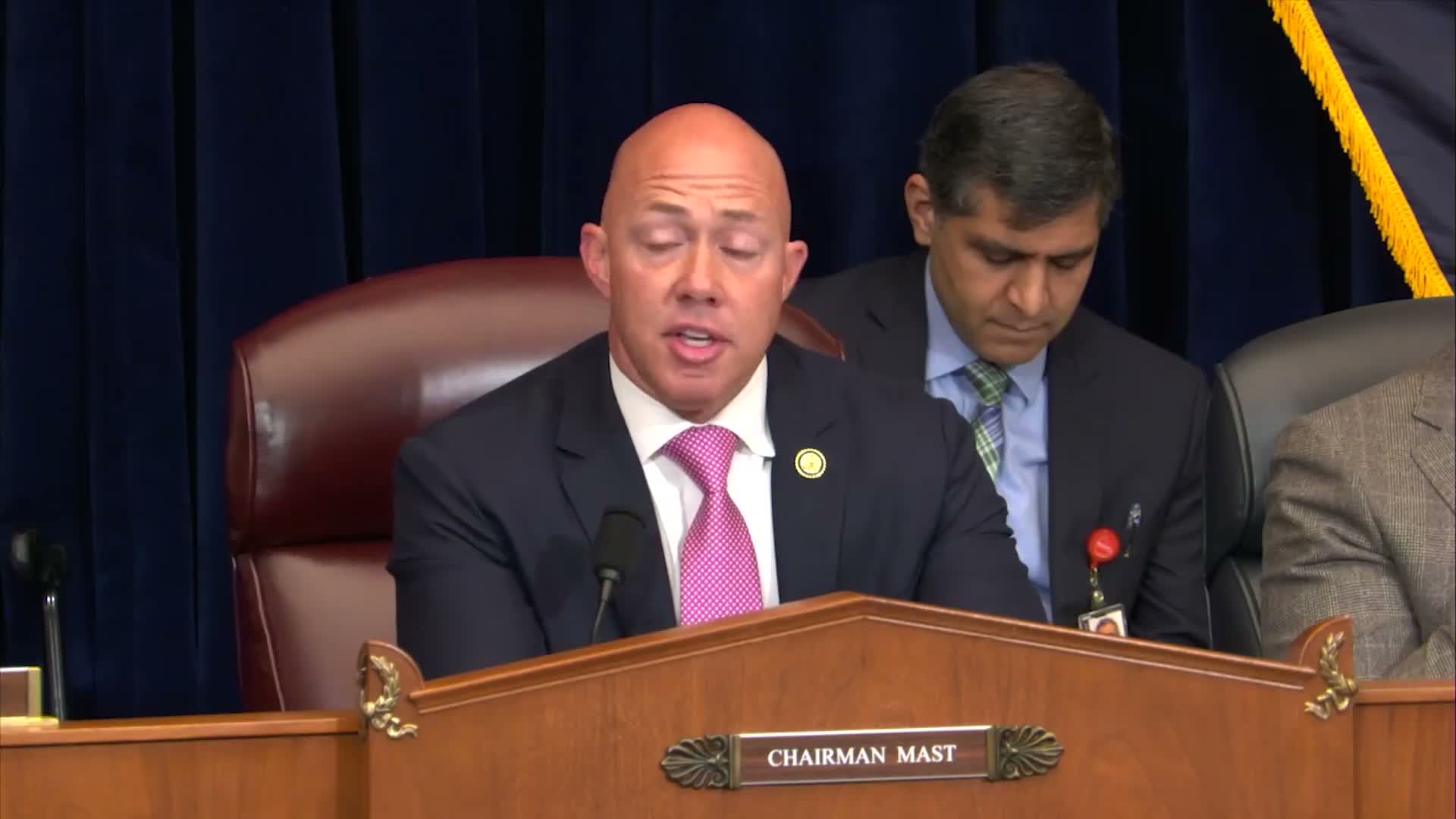
Summary
At a House Committee on Foreign Affairs hearing, an unnamed speaker warned of foreign fighters and reported relocations of ISIS detainees, urged action on integration deals with the SDF, and said U.S. sanctions relief remains conditional on specific steps by President Ahmed al Sharra.
An unidentified speaker at a House Committee on Foreign Affairs hearing said the United States, the international community and Syrians want the country to move past years of conflict, but warned that recent developments in Syria raise serious national security concerns.
"Syria is nowhere close to where they need to be today," the speaker said, arguing that recent incidents — including reported attacks on Druze, Kurds and Alawites and the alleged presence of foreign fighters inside Syrian security forces — undermine prospects for stable, democratic governance. The speaker said those foreign fighters are in some cases backed by Turkey and described those developments as unacceptable.
The speaker said recent actions against the Syrian Democratic Forces (SDF), a longtime U.S. counterterrorism partner, "forced CENTCOM to relocate 7,000 ISIS fighters from detention facilities across Syria and move them into Iraq." The statement was presented as factual testimony to the committee; the transcript does not include corroboration or supporting documentation for the specific figure.
The speaker also raised concern about Russia’s continued presence in Syria and suggested Russia may be harboring former president Bashar al‑Assad. The speaker said that questions remain about Moscow’s role and motives.
On the topic of Syria’s leadership, the speaker said President Ahmed al Sharra told them he sought to "liberate himself from his past" and had joined the global coalition to defeat ISIS, calling that development a "glimmer of hope." The speaker also asserted, without further evidence recorded in the transcript, that the current Syrian president had formerly been an al‑Qaeda fighter; that claim appears in the hearing record as an allegation rather than a verified fact.
The speaker noted Congress was "pleased to see" a recent integration agreement between President Ahmed al Sharra and SDF General Masloom but cautioned it was the third such deal and that U.S. policymakers expect concrete action rather than repeated pledges. The speaker said the United States repealed the Caesar sanctions because the original reason for them — the presence of Bashar al‑Assad in power — "no longer existed," but emphasized that repeal is conditional. The speaker listed conditions the United States expects in exchange for deeper engagement, including advancing military integration, protecting and integrating religious and ethnic minorities into governance, and cooperation with the United States to combat terrorists.
The hearing's stated purpose was to examine the challenges Syria faces and the implications for U.S. national security if the country moves in the wrong direction. The transcript records the speaker’s statements and assertions; it does not record votes, formal actions, or corroborating exhibits attached to the claims made during this segment of the hearing.