
House Committee framing: ‘Weaponized mass migration’ as hybrid threat to Europe and U.S. interests
Get AI-powered insights, summaries, and transcripts
Subscribe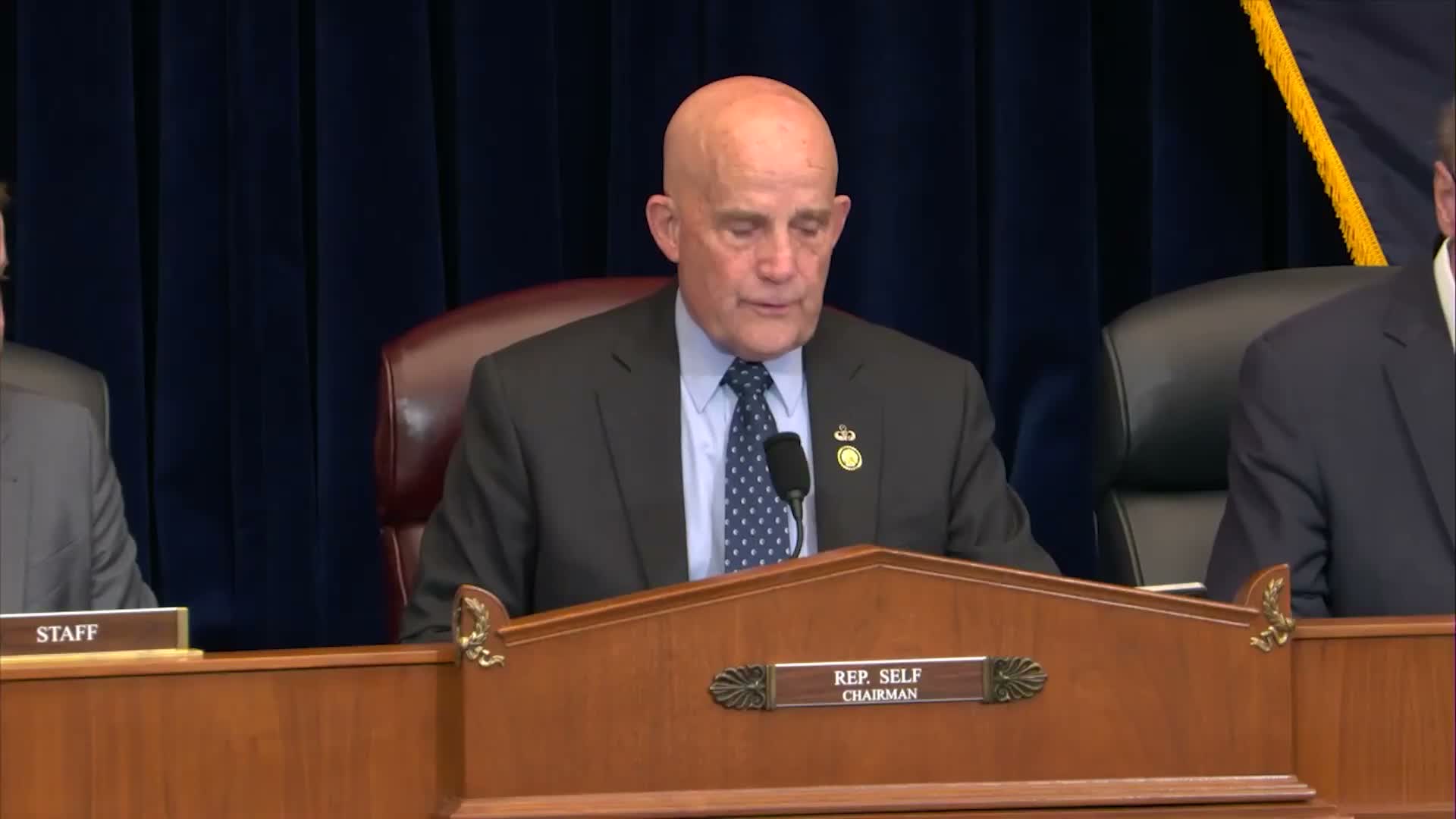
Summary
An opening statement at a House Committee on Foreign Affairs hearing framed "weaponized mass migration" as a deliberate hybrid tactic used by adversaries to weaken European states and strain alliances, citing Russia's 2015 Syria campaign and recent Belarus‑Poland incidents and urging transatlantic coordination.
Speaker 1, identified in the transcript only as "S1," opened a House Committee on Foreign Affairs hearing by warning that "the threat environment facing Europe is rapidly evolving" and urging the committee to examine how adversaries exploit migration to harm allied states.
The speaker said the hearing builds on a prior subcommittee session and will focus on "one of the most destabilizing tools in this hybrid playbook, weaponized mass migration," arguing that what may appear to be a humanitarian or border-management challenge can be part of a broader campaign of hybrid aggression.
"Look no further than Russia's 2015 intervention in Syria, which resulted in mass migration to Europe," the speaker said, and added a recent example: "Belarus's more recent weaponization of migrants against Poland." The speaker cited Polish authorities' figures to say that in 2018 there were "only 3 attempts" reported to cross from Belarus into Poland, and that "in 2025, the number was over 25,000." These numbers were presented by the speaker as evidence of the scale and effects of such tactics.
The speaker described the tactics as deliberate efforts "to overwhelm border authorities, provoke crises, and to degrade the overall national security of target countries," saying the objective is not merely disruption but the "erosion of public confidence, erosion of state capacity, and erosion of unity among allies." The testimony linked weaponized migration to organized crime, human trafficking, illicit finance, and "Islamic extremism," warning those intersections create security blind spots.
On human costs, the speaker said migrants "are often subjected to exploitation, coercion, or potential radicalization," and that European citizens face strains on public safety and social services. The statement framed these outcomes as intrinsic to a strategy that seeks to sow fear and division.
The speaker argued that although the EU and NATO increasingly recognize weaponized migration as a hybrid threat, recognition alone is insufficient and "effective deterrence requires coordination and sustained commitment from both sides of the Atlantic." The speaker said the committee has a responsibility to examine how these tactics intersect with other hybrid methods and the implications for U.S. interests.
The opening concluded with the speaker noting planned attendance at the Munich Security Conference later in the week and an anticipation of witness testimony and discussion. The hearing record here contains the opening framing and claims; no formal votes or committee actions appear in the transcript provided.