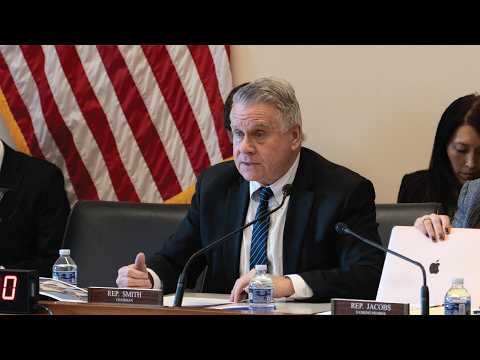
House committee hearing urges swift implementation of Washington Accords after recent attack
Loading...
Summary
In a House Committee on Foreign Affairs hearing, an unidentified member urged full implementation of the Washington Accords, warned that recent violence demonstrates the threat of "spoilers," and called for synchronized security and economic steps by the DRC and Rwanda to sustain the peace.
An unidentified speaker opened a hearing of the House Committee on Foreign Affairs by calling the Washington Accords a "very significant start" that brought both parties to the negotiating table and that must be defended against actors who would undermine it.
The speaker said they attended the December signing with Chairman Mast and described the accords as offering economic and security benefits for the Democratic Republic of Congo, Rwanda and the United States. "Bringing both parties to negotiate at the same table was historic in and of itself," the speaker said.
The hearing was convened, the speaker said, because recent violence — described in the transcript as a targeted attack by spoilers — demonstrates the fragility of the peace and the need for international follow-through. The speaker invoked the humanitarian stakes of the conflict, saying "for the memory of the some 6000000 dead" from the decades-long fighting.
On implementation, the speaker outlined a regional economic integration framework and a four-phase concept of operations included in the accords. They said Rwanda would consider redeploying troops only if the DRC adheres to a synchronized schedule to eliminate the FDLR militia and that parties controlling other armed groups must demobilize combatants.
The speaker emphasized that governments alone cannot secure durable peace and singled out civil-society and faith-based organizations as essential to inclusive national dialogue. The transcript names the National Episcopal Conference of Congo (SENCO) and the Church of Christ in Congo (ECC), and recalls their role in brokering the Saint Sylvester agreement on New Year's Eve 2016 and a 2025 "social pact for peace."
The speaker said they had met earlier with faith leaders who described themselves as optimistic but realistic about obstacles, and mentioned regional diplomatic efforts led by the president of Angola (as referred to in the transcript) to convene a broader dialogue.
The hearing record shows the committee is pressing for a mix of synchronized security steps and economic incentives to ensure the accords' commitments are implemented. The speaker said the United States must stand with those who seek peace and protect civil-society actors working on the ground.
The hearing continued to other agenda items, including U.S. policy toward mineral supply chains and proposed legislation related to cobalt imports.