Get Full Government Meeting Transcripts, Videos, & Alerts Forever!
Get email alerts on the District Safety Plan topic
No spam. Unsubscribe anytime.
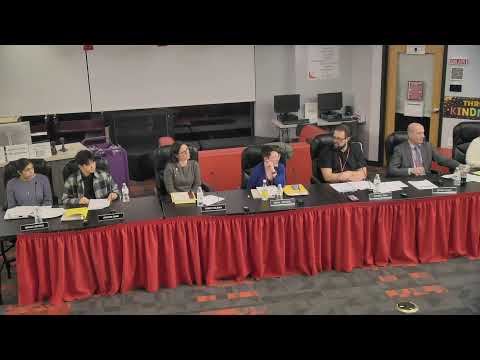
Board hears public hearing on safety-plan addendum to implement 'Disha's Law' cardiac response teams
Summary
At a public hearing the board reviewed an addendum updating the districtwide safety plan to implement New York's "Disha's Law," formalizing school-level cardiac emergency teams, mapping AED locations and adding training requirements; the district reported roughly 140–150 certified responders and a near-term training rollout with ambulance corps support.
Board President opened a public hearing on an addendum to the South Orangetown Central School District districtwide safety plan and heard a presentation from John Gallino on new cardiac response requirements.
Gallino said a state law commonly described in the transcript as "Disha's Law" requires public and charter schools to implement a cardiac emergency response plan. "A law was passed, back in the summer called Disha's Law, which essentially required all New York State public schools and charter schools to implement a cardiac emergency response plan," Gallino told the board. He said the addendum adds appendices (listed in the plan as 13–15) that define team roles, list AED locations and formalize a training component tied to the district's online portal.
The presenter described the intended team structure: a nurse as the primary responder, security personnel as backup, one person administering CPR, one person retrieving the AED and one person calling 911 to expedite EMS response. Gallino said the district completed the required 30-day public review and met the update deadline (noted in the presentation as January 20 for including the legislative language). He also said the district tracks certified staff and AED pad/battery expirations in a portal and plans to run in-district training in the coming weeks with assistance from the South Orangetown Ambulance Corps.
Board members asked operational questions about how certified personnel would be alerted and how the district would coordinate with first responders. Gallino said the plan anticipates radio communications between guards and nurses rather than a general loudspeaker announcement and that volunteers nearer an event may respond. In response to a member's suggestion, Gallino said he would discuss establishing coded radio language (for example, a "code blue" approach) with the security committee.
The board did not take a formal vote on the plan during the hearing; procedural motions to open and close the public hearing were recorded in the meeting minutes.
The next steps described were internal: finalize the addendum language, post the public-facing elements on the district website, conduct staff training and run voluntary drills with school teams and the ambulance corps.