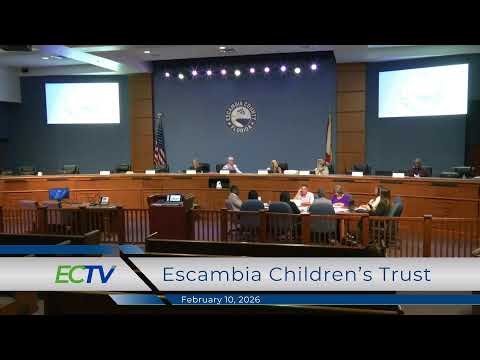
Children’s Trust board approves release of $3.5 million out‑of‑school‑time RFP
Loading...
Summary
The Escambia County Children’s Trust voted to release a $3.5 million out‑of‑school‑time Request for Proposals (RFP) with a Feb. 12 release date, setting program expectations, reimbursement caps and a timeline for awards and contract starts.
The Escambia County Children’s Trust on Tuesday approved staff’s recommendation to release a $3.5 million out‑of‑school‑time Request for Proposals, a funding round the trust says will prioritize measurable attendance, academic and social‑emotional outcomes.
The board voted to proceed with the RFP timeline staff presented, which calls for a public release on Feb. 12, a mandatory information session Feb. 18, proposals due April 10, a grants committee recommendation April 28 and a board funding recommendation on May 12 with contracts expected to begin Aug. 1.
Deborah Ray, who presented the RFP to the board, described the packet’s program requirements and accountability measures and emphasized the financial and programmatic safeguards staff built into the solicitation. “With your approval, we will release this RFP on Thursday the twelfth,” Ray said during the presentation. She outlined key limits: a total out‑of‑school‑time budget of $3,500,000, a maximum award per program of $350,000 and a participant reimbursement cap of $2,500 per full‑year participant (cited as $2,000 for school‑year participation plus $500 for summer programming). Ray also described staff plans for mandatory financial workshops, required documentation and a scoring rubric for staff and external reviewers.
The RFP includes minimum program standards and quality expectations: a minimum of 100 program days per year, summer programming expectations for Escambia County school sites, staff‑to‑student ratio minimums (1:15 minimum, with higher maximums by grade band), required annual training for direct‑service staff, data collection on ELA/math proficiency and growth, social‑emotional learning measures, attendance and discipline metrics, and defined pathways for elementary, middle and high school participants. Ray said staff obtained a vendor quote for supplemental curriculum and analytics tools and cited a per‑participant license estimate used to inform budgeting.
The RFP item followed a presentation from the Children’s Home Society about its community partnership school at Pine Forest High School. Leah Harrison, executive director of Children’s Home Society, thanked the trust for prior funding that helped launch the partnership school. Community partnership director Reginald Robson highlighted enrollment growth and academic movement, saying the program’s graduation rate is currently “81 percent, and our goal is 100 percent.” Student DJ Blanks described academic gains: “I came to Pine Forest with a 1.4 GPA,” he said, and told the board the program helped him regain athletic eligibility and improve his GPA.
Board members pressed staff on operational details, sole‑source tracking and the timeline for releasing the RFP. After discussion the board moved, seconded and voted to authorize staff to proceed with the timeline presented; the chair noted unanimous approval.
Next steps: staff will publish the full RFP materials on the trust’s landing page, run the scheduled public information sessions and begin reviewer recruitment. Staff said they will send a media release and notifications to elected officials and community providers.