Get Full Government Meeting Transcripts, Videos, & Alerts Forever!
Get email alerts on the Sanitation And Fleet topic
No spam. Unsubscribe anytime.
Decatur staff report faster trash pickup, compactor gains and in‑house garage repairs
Summary
Department leaders told the City Council the environmental services team reduced bulk pickup wait times, added a second compactor that cut dump wait times by about 40%, saved roughly $400,000 by bringing beautification services in house, and the city garage repaired previously written‑off vehicles to reduce costs.
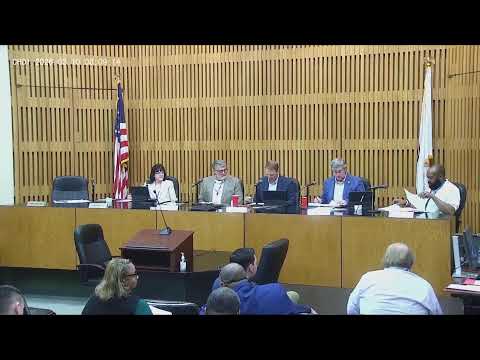
City staff on Feb. 16 told the Decatur City Council that recent investments and operational changes are shortening service delays and cutting costs.
Daniel Boutwell, presenting for Environmental Services, said the department now serves 19,573 weekly accounts, collected 20,594.25 tons of regular garbage and 12,427 tons of bulk goods last year, and has reduced bulk‑pickup turnaround from four‑to‑six weeks to about one-and-a-half to two weeks, with one full city pass completed in a single week last week. Boutwell credited a recently installed second compactor at the transfer station for roughly a 40% reduction in truck dump wait times and said all collection vehicles are now three years old or newer after a planned fleet replacement.
Boutwell also described the Beautification program, which began in earnest about two years ago, uses work‑release/state trustee crews and three vans, and picked up 10,522 large bags of roadside litter last year. He said the city discontinued a contracted service and brought the work in house, saving a little over $400,000 without adding headcount, and highlighted staff promotions including Charles Rowe to manager.
Drew, the city garage manager, said he has focused on repair turnaround, preventive maintenance checklists, consolidated parts purchasing, dealership training at no extra cost, and safety upgrades. Those steps, he said, reduced downtime, avoided outside labor costs, and enabled the shop to repair vehicles previously considered beyond repair (including a bus and a patch truck), saving the city thousands of dollars.
Council members praised the improvements and asked follow‑up questions. Boutwell said the department's next priority is establishing a consistent, scheduled bulk‑pickup day for residents but did not provide a firm timeline. The council did not take formal action on these operational updates during the work session.