Spokane County briefed on state budget timing, public-defense fund and juvenile-sentencing bill
Loading...
Summary
County legislative staff told commissioners the state budget will be released later this month, reported an income-tax proposal now would dedicate 7% (up from 5%) of revenue to a public-defense fund under a revised distribution formula, and warned a juvenile-sentencing bill ("23.89") could shift millions in costs to counties.
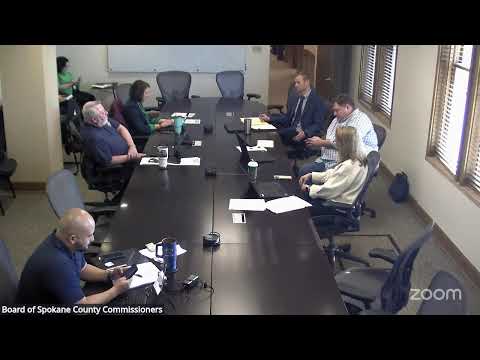
Mike Burgess, a county legislative staffer, briefed the Spokane County Board of County Commissioners Tuesday on the state legislative calendar and bills that could affect county budgets.
"Today's day 30 of 60," Burgess told the board, noting the fiscal committee cutoff had passed and floor action would dominate until the Feb. 17 cutoff. He said the Legislature is expected to release budget proposals around Feb. 20 and county staff will analyze capital and operating impacts to Spokane County.
Burgess said one bill with direct county impact would create a public-defense account funded by a portion of a proposed income tax. "It increased the amount of money ... from 5% to 7% of the total," he said, and added the distribution formula was amended to a more equitable approach. Burgess said WASAC and other public-defense advocates continue to press for a larger share.
Burgess also flagged a juvenile-justice and sentencing bill he called "23.89," saying it bundles a number of sentencing and procedural changes. "If some of these sentences were to be changed for crimes that are committed by folks 18, I'm told there's tens of millions of dollars in terms of impact on counties," he said, adding that Spokane County's share would scale with population and could be in the millions. He said the county prosecutor's office is actively opposing the bill and that staff will coordinate with WASAC and the county delegation.
On other measures, Burgess reported a tax-increment-financing bill now includes public-safety language (citing RCW 39.89 as the code referenced) and that a waste-to-energy bill moved out of committee after amendments. Scott Chesney, the county's land-use expert, briefed the board on a residential-development/mixed-use zoning bill and said recent amendments softened a prohibition on requiring ground-floor commercial uses, giving the county an escape route to remain neutral.
Why it matters: The combination of tax and sentencing changes under consideration could change which level of government pays for public-defense, juvenile services and local infrastructure. County staff told commissioners they will provide the bill language and distribution formulas to allow the board to consider formal positions before deadlines.
Next steps: Staff will circulate the income-tax language and the updated distribution formula, coordinate with WASAC and local prosecutors on the juvenile bill, and prepare talking points for the county's legislative delegation.