
House Energy and Digital Infrastructure to press JFO for statewide IT spending details in budget letter
Get AI-powered insights, summaries, and transcripts
Subscribe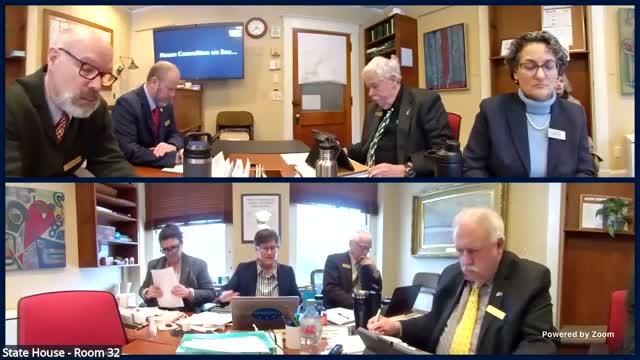
Summary
The committee said it will ask the Joint Fiscal Office for a consolidated list of IT projects and budgeted spending as it prepares a budget letter to House Appropriations, citing concerns about dashboard timeliness and growing internal-service-fund deficits at the Agency of Digital Services.
Speaker 1, chairing the House Energy and Digital Infrastructure committee, told members on Feb. 10 that the panel’s budget letter to House Appropriations is due a week from Friday and should emphasize oversight of statewide IT work rather than specific funding requests.
“The areas of the budget that we need to make sure that we understand and can write a little summary of are B105, that’s the Agency of Digital Services, B233 the Department of Public Service, B233.1 the community broadband board, and then 234 the Public Utility Commission,” Speaker 1 said, asking members to review prior testimony and the ADS materials before the committee finalizes language.
Several members urged the committee to secure a briefing from the Joint Fiscal Office. “They should be able to pull that up for us,” Speaker 2 said, referring to a consolidated list of IT projects across agencies and what is budgeted for the coming fiscal year. Speaker 1 agreed to invite JFO “ASAP.”
Members described the EPMO dashboard as the committee’s main oversight tool but questioned whether it is being kept current. “One of the key things that we want to flag is the dashboard and how critical it is that that be timely and maintained,” Speaker 1 said, noting the committee used the dashboard and the ADS annual report in prior oversight work.
Speakers also raised figures describing ADS-related spending and deficits. Speaker 4 said there are “hundreds of millions of dollars” of projects queued over several years and that “the big deal from his point of view is the 100,000,000 or so that we’re spending every year on IT projects.” Speaker 1 expressed alarm at an internal-service-fund trend she summarized as increases “from 1,500,000 to 7,000,000 to 13,000,000 to 25,000,000,” and said attrition-driven staffing changes at ADS could affect project delivery.
Committee members cited gaps on specific projects when reviewing the dashboard. For example, a dashboard entry for the CWIS project shows a 2023 start and 2028 completion date but lacks clear implementation or payment details; members recalled testimony that timelines could range “2 to 5 years” depending on resources.
What’s next: the committee chair said she will compile a working document summarizing testimony, outstanding questions and any explicit requests, circulate it to members, and arrange for JFO to brief the committee before the budget letter is finalized and transmitted to House Appropriations.