
Yorktown preliminary budget: general support +5.6%, O&M +4.7%; transportation rising
Get AI-powered insights, summaries, and transcripts
Subscribe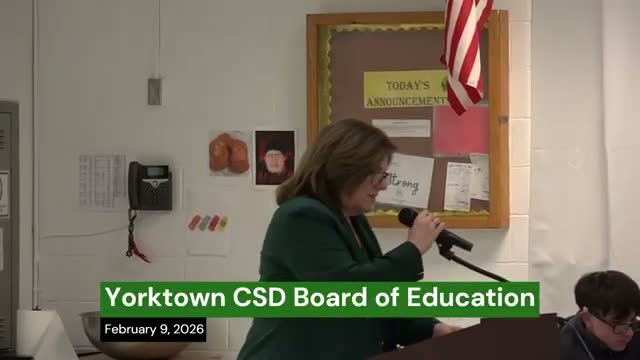
Summary
Assistant Superintendent for Business Lisa Sanfilippo presented a preliminary budget overview noting a tentative $227,000 (5.6%) increase to general support, an O&M increase of about $300,000 (4.7%), a projected 10% property/casualty insurance rise, ERS/ TRS rate changes and transportation as the largest increase area.
Assistant Superintendent for Business Lisa Sanfilippo presented the district’s preliminary budget areas for general support, facilities/operations and maintenance (O&M), employee benefits and transportation at the Feb. 9 board meeting.
Sanfilippo said the figures were tentative and the board will adopt a final budget in April. She listed drivers: an estimated 10% increase in property and casualty insurance, increased BOCES and administrative charges, and a rise in utilities. General support (which covers the board, district clerk, superintendent’s office, business office, auditing/legal services and HR) is currently projected to increase by roughly $227,000 (about 5.6%).
On facilities and O&M, Sanfilippo said the district maintains more than 100 acres and has 48 full‑time equivalent O&M staff; currently the O&M budget shows a projected increase of about $300,000 (approximately 4.7%), driven by contractual salary increases, equipment purchases (a pickup truck with plow and additional salters) and required compliance work such as the five‑year building condition survey the state requires.
Employee benefits: Sanfilippo said ERS (for classified civil service employees) is projected to rise from about 15.8% to 17.1%, while TRS (teachers and administrators) is projected to decrease from roughly 9.59% to 8.24%, which the presentation characterized as generating meaningful savings. Health insurance premiums were estimated to increase by about 5% and workers' compensation was projected up about 3.2% but offset by a dividend from the consortium.
Transportation: the district transports over 3,000 students daily, currently uses 68 vehicles, and is seeing contracted rates increase by 5%. Sanfilippo said the largest budgetary increase is the home‑to‑school transportation line; the district is conducting head counts to analyze potential route consolidations for next year but added route changes can be disruptive and would be a last resort.
Sanfilippo invited questions from the board; members asked about construction‑related route impacts, residency investigations and the workers' compensation dividend, and she answered with process and timing clarifications.