Get Full Government Meeting Transcripts, Videos, & Alerts Forever!
Get email alerts on the Permit System Oversight topic
No spam. Unsubscribe anytime.
Council presses administration as Baltimore reports faster permit turnaround; officials agree to advisory group and consolidation review
Summary
At a Feb. 10 Housing & Economic Development Committee hearing, administration officials said technical fixes have cut permit backlogs and median residential issuance time, while council members and developers pressed for a consolidation plan, a monthly feedback loop and staffing to address persistent bottlenecks.
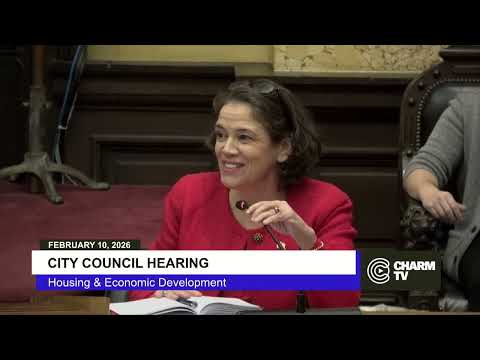
Baltimore City—s Housing & Economic Development Committee on Feb. 10 heard competing accounts of progress on the city—s new Accela permitting system as council leaders demanded clearer authority, a formal feedback loop and a timetable for consolidation.
Council President Z. Cohen opened the hearing by saying the city—s broader revival depends on a permitting system that "works for everyone" and called for three concrete steps: naming who is in charge of permitting, establishing a monthly working group with user representatives and producing a six‑month plan to consolidate permitting under a single agency or leader per the "Be More Fast" plan. "This is Baltimore's moment," Cohen said, and added the council will "demand corrective action when something is not working." (Z. Cohen, Council President)
Justin Williams, director of Permitting and Development Services, told the committee the department has deployed more than 30 technical and process fixes since October and presented data he said show the system "has turned the corner." Williams said median time to issue a typical single‑family/residential permit fell from 12 days in October to three days in January, that auto‑issuance now handles about 20% of volume (roughly 1,300 permits) and that the count of permits awaiting city action dropped markedly. "We have stabilized the foundation and now we are building on that foundation to get this system to where it needs to be for our residents," Williams said. (Justin Williams, Director of Permitting and Development Services)
Council members welcomed the metrics but pressed for verification and user engagement. Several elected officials said the data presented did not match the "lived experience" of builders and residents who still report delays or confusing portal displays. Williams and Deputy Mayor Calvin Young committed to convene administration staff and provide the committee with a timeline and plan within a week and to stand up the advisory work group called for in the Be More Fast plan.
Key unresolved items raised during the hearing included how to consolidate permitting authority across agencies, whether to pilot proactive inspections or targeted audits to detect unpermitted "gut rehabs," the need for clearer public‑facing timelines and the staffing shortfalls in specialist plan‑review roles (notably electrical reviewers). Housing staff and the administration agreed to supply several follow‑up items: a breakdown of Accela-related contract costs, permit revenue since implementation, FY27 budget plans for permitting improvements, and estimates for any proactive inspection pilot.
The committee scheduled continued oversight and asked the administration to include council and user representatives in monthly technical testing and feedback sessions as the city rolls out an in‑house message board and other portal improvements. The meeting was adjourned by Chair James Torrance after final comments and commitments from administration officials. (Next steps: administration response within one week; advisory/advisory group timeline to follow.)