Get Full Government Meeting Transcripts, Videos, & Alerts Forever!
Get email alerts on the Hoarding Response Workshop topic
No spam. Unsubscribe anytime.
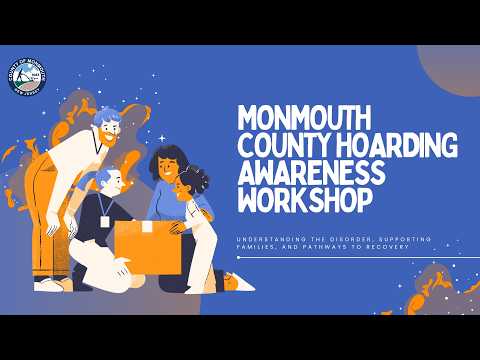
Monmouth County health officials open hoarding workshop to boost cross‑agency response
Summary
Monmouth County Health Department convened a workshop to improve coordinated responses to hoarding disorder, bringing clinical, legal, housing and enforcement partners together; County Commissioner Sue Kiley and Health Officer Chris Merkel emphasized empathy, information‑sharing and referral networks such as Monmouth ACTS.
The Monmouth County Health Department opened a workshop on hoarding disorder aimed at strengthening cross‑agency responses and practical supports for affected residents. Health Officer Chris Merkel, who moderated the event, framed the day around "connecting disciplines, building solutions," and said the county would hear from experts in clinical mental health, legal services, housing, enforcement and public health.
"Our theme, connecting disciplines, building solutions, reflects what today is really all about, coming together across agencies, departments, and disciplines to understand hoarding in a deeper way and to strengthen our shared response," Merkel said, urging open dialogue among public health officials, legal advocates, code enforcement officers, clinicians and housing providers.
County Commissioner Sue Kiley described a personal encounter that shaped her view of the issue. She recounted visiting a home where clutter packed rooms almost to the ceiling and said the resident—whose loss and circumstances left her humiliated—made clear the emotional and practical barriers to seeking help. "She was humiliated. She was upset. She was embarrassed," Kiley said, adding that the experience underscored the importance of responses that treat people with dignity.
Kiley highlighted Monmouth ACTS, a local partner network, as an effective mechanism for sharing information and directing residents to the most appropriate services. "If I couldn't help you, I could send you here," she said, pointing to the value of referral pathways when a single agency cannot meet all needs.
Organizers said the workshop will include panel presentations and a question‑and‑answer session designed to surface practical strategies and ethical approaches for intervention. No formal policy actions or votes were recorded during the opening remarks; the session is framed as a convening to share practices and promote collaboration among departments and community partners.