Get Full Government Meeting Transcripts, Videos, & Alerts Forever!
Get email alerts on the Consolidation topic
No spam. Unsubscribe anytime.
Police Jury reviews parishwide consolidation scenarios as LNG revenue reshapes budgets
Summary
Jurors heard projections showing large 2024 parish collections—about $72.7 million overall and ~$47 million from LNG—and debated consolidating taxing districts (ambulance, water, fire) into parishwide entities, representation options, and a timeline for public education and votes.
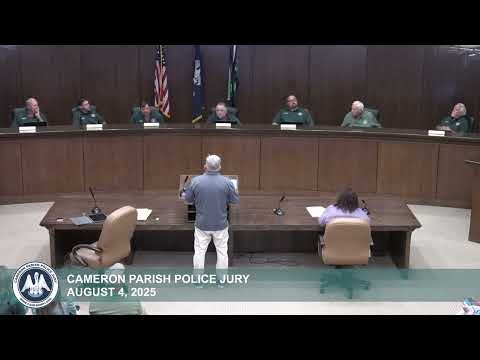
Cameron Parish jurors opened an extended discussion on Aug. 4 about whether to consolidate special taxing districts and how expected LNG-related property tax increases could reshape local budgets.
A staff presenter identified in the record as Mike Scott provided revenue figures for the 2024 tax year and millage scenarios the jury asked for. The presentation showed roughly $72.7 million collected parishwide in 2024, with the LNG industry accounting for an estimated $47 million of that total. Scott also broke down ambulance-district revenues: Ambulance District 1 at roughly 31.08 mills generated about $2.0 million; Ambulance District 2 at about 9.5 mills generated about $4.0 million. Under a consolidated parishwide millage example (roughly 12.25–12.5 mills), staff projected materially larger parishwide revenues in later years as LNG facilities come online.
Jurors and local officials pressed on how consolidation would change local control and representation. Several speakers said a parishwide tax question would be an ‘in-lieu-of’ proposition and would be voted on by all residents in the new consolidated district; staff noted that if ambulance districts 1 and 2 were combined, the entire parish would vote on the tax question rather than only the former district electorates. Jurors raised whether historic taxing districts or juror voting districts should determine board seats, and whether a single district should be permitted to opt out of consolidation. One juror said town-hall meetings would be needed to educate voters before any ballot measure.
Staff also described a legislative path to address board representation: local bills can change board sizes (the jury used the recent consolidated water district’s increase from five to six seats as an example) so that historical taxing areas retain representation after consolidation. Jurors directed staff to assemble clearer options and a plan for public outreach, including bringing ambulance leadership and other district boards into upcoming conversations.
The discussion closed without a decision; jurors described the session as the beginning of a multistep process that will include legal review, public meetings and possible local legislation before any ballot question is finalized.