Get Full Government Meeting Transcripts, Videos, & Alerts Forever!
Get email alerts on the Fees Transportation topic
No spam. Unsubscribe anytime.
Howard County board debates charging fees for buses, sports, summer and facility use; staff offer models and equity caveats
Summary
Board members and staff spent the Jan. 15 work session probing options to generate revenue through fees for transportation, athletics, evening/summer programs and community facility use. Staff presented per-student transport models, cautioned about startup costs/collection burdens, and recommended careful operational planning; board set a Feb.5 decision window for transportation.
Board members spent much of the Jan. 15 work session examining a staff "fee-for-service" memo that modeled revenue and operational impacts for four categories: student transportation, student athletics, evening and summer school, and community use of facilities.
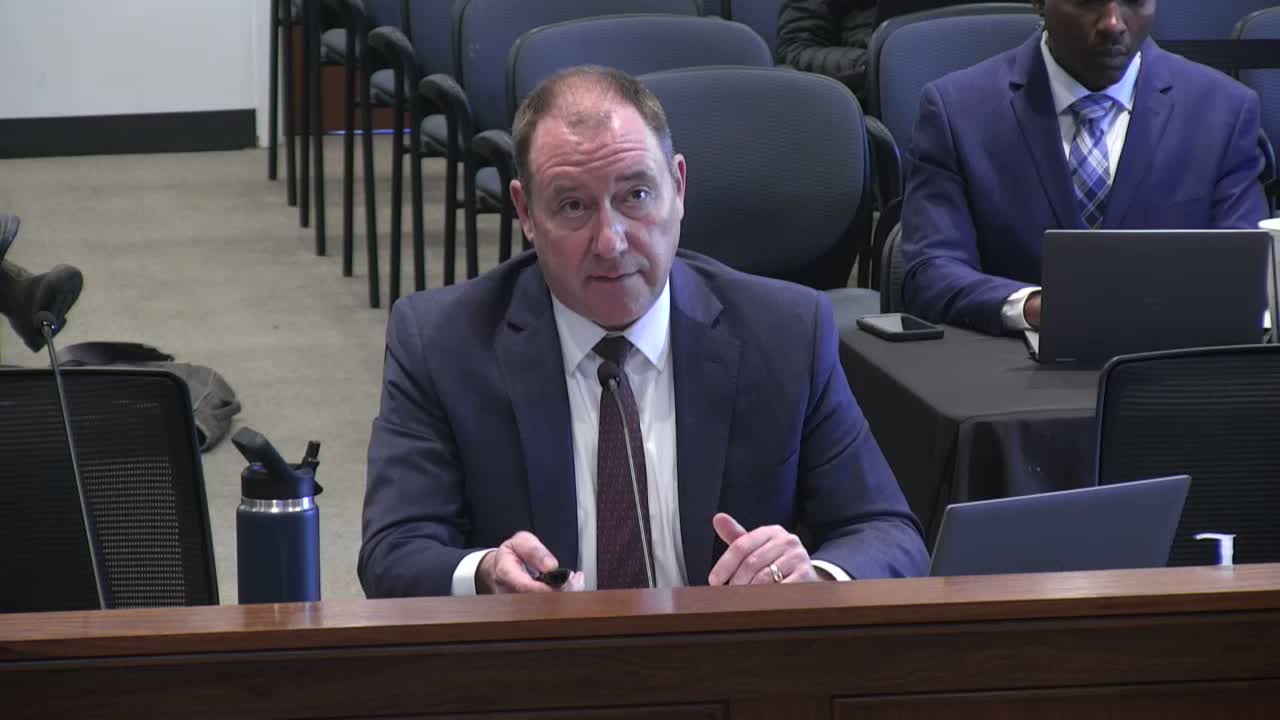
Cornell Brown, chief operating officer, presented transportation estimates and cautioned about operational trade-offs: "So we spend around $35,000,000 for general transportation services," he said, then outlined a sliding-scale model estimating per-student annual charges ranging from roughly $11 (to recoup 1% of costs) up to about $1,001 if the district attempted to recover the entire contract cost; staff noted a 5% recoup would equate to about $56 per student annually and 10% about $112.
Board members raised equity concerns and practical barriers. Several members, including Mr. Alastair, said charging for buses would disproportionately affect lower-income families and risk unequal enforcement at the school level. Others, including Miss Watts and several staff members, urged incremental steps—collecting better ridership data through RFID systems, enforcing an opt-in registration for bus service, and piloting changes before including revenue estimates in the FY27 budget.
Student athletics drew mixed views. Adam Eldridge, director of athletics and activities, warned fees reduce participation: "Anytime we create a barrier to participation for a student... we see participation drop," he said. Some board members proposed a modest annual activities fee or suggested intensifying community fundraising rather than direct user fees; concerns included waivers, multi-sport athletes and operational clarity about what a fee would cover.
For evening and summer programs staff noted that credit-recovery during summer is legally fee-exempt but evening credit recovery charges a small fee (about $125, reduced for free/reduced students) and is projected to produce limited revenue. Enrichment programs such as GT and the Black Student Achievement Program (BSAP) were discussed as expensive to run; staff warned that breaking even could require much larger per-student fees than the memo's initial estimates and that reducing slots without a clear alternative would undermine program purposes.
On community use of facilities the staff recommended updating policy and implementing market-based rates (with a commonly used four-hour minimum) to recover custodial, utilities and security costs. Several board members said current practice undercharges organizations that then charge families to use school fields and facilities; staff noted long-standing MOUs dating to the 1970s that will need review.
What's next Staff said any motion to adopt student transportation fees must be made by the Feb.5 work session to provide implementation lead time; athletics, summer school and community-use policy changes will follow later in the budget cycle. Public comment opportunities are available at the Jan.29 public hearing (full) and the Feb.9 hearing.
The board asked staff for updated memos with cost/benefit detail, startup cost estimates (tablets, software and staffing), and an implementation timeline before any fee revenues are assumed in the FY27 budget.