
Wyoming House introduces a slate of bills in busy morning; several advance to committees, others fail
Get AI-powered insights, summaries, and transcripts
Subscribe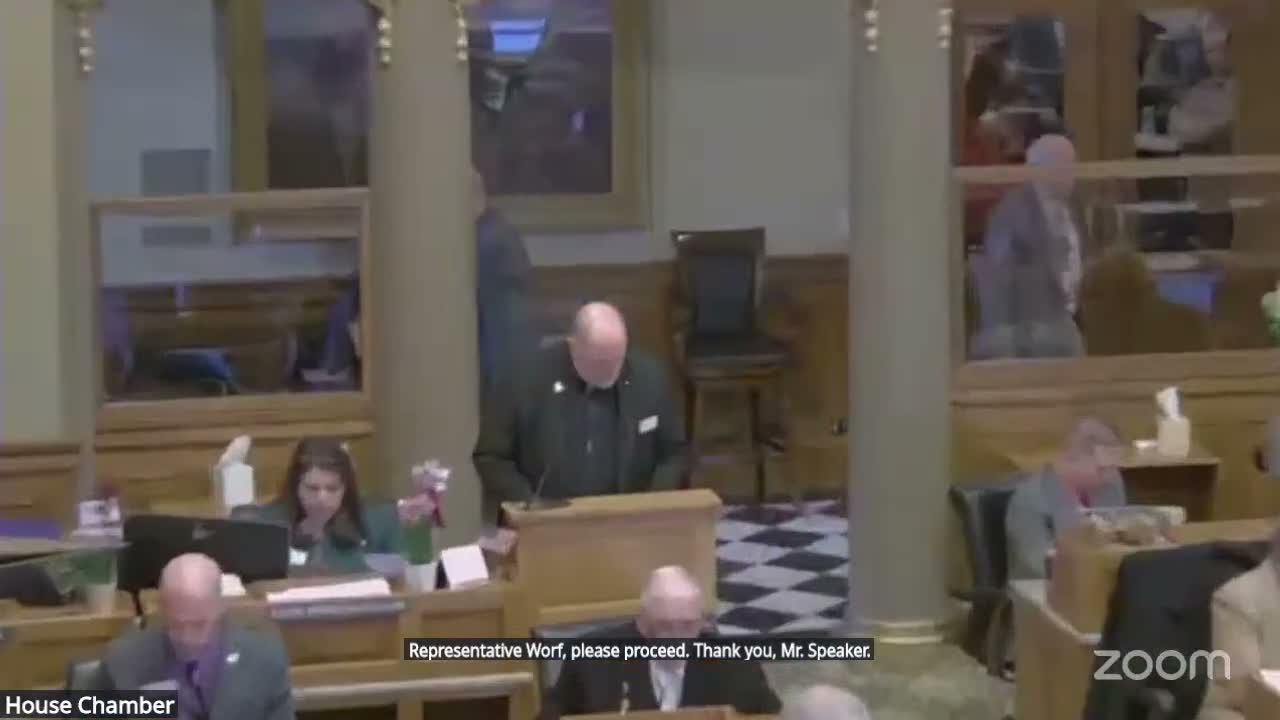
Summary
On Feb. 10, 2026, the Wyoming House opened its second day of the budget session, heard a floor presentation from the Boys & Girls Clubs and voted on numerous first‑readings: several bills were introduced and referred to committees while others failed to reach the two‑thirds threshold required for introduction.
The Wyoming House spent the morning on procedural rule fights, a floor presentation from the Boys & Girls Clubs and a long series of first‑readings that left several proposals assigned to committees and several others rejected for lack of the two‑thirds vote required for introduction.
Votes at a glance - HB 70, "Wyoming Granite Act" (Representative Singh) — introduced and assigned to Judiciary (Committee 1) after a 57‑5 roll call; sponsor framed it as aimed at "protecting the First Amendment" online. - HB 28, exploitation-of-children amendments (Representative Straub) — introduced and assigned to Labor (Committee 10), 60‑2. - HB 108, Department of Audit reports (Representative Bratton) — introduced and assigned to Judiciary (Committee 1), 61‑1; sponsor said the bill codifies posting of existing reports online and carries no fiscal impact. - HB 103, Wyoming First Amendment Protection Act (Representative Oughtman) — introduced and assigned to Judiciary (Committee 1), 45‑15 with 2 conflicts; sponsor described it as an anti‑SLAPP measure to allow early dismissal of meritless suits. - HB 26, tribal-government vehicle registration exemption (Representative Posey) — introduced and assigned to Transportation (Committee 8), recorded 62‑0. - HB 102, protecting kids from deepfakes and exploitive images (Representative Lean) — introduced and assigned to Education (Committee 4), recorded 62‑0; sponsor said it criminalizes AI systems designed to create sexualized images of children and bans possession of synthetic child abuse imagery. - HB 56, carbon-capture mandate repeal (Representative Knapp) — introduced and assigned to Minerals (Committee 9), recorded 52‑10. - HB 69, Department of Health land transfers (Representative Larson) — introduced and assigned to Transportation (Committee 8), recorded 54‑8. - Attempts that failed to reach the two-thirds threshold: HB 94 (Election purity and hand count act), HJR 3 (storage of spent nuclear fuel vote requirement), HB 30 (vehicle registration fee amendments), and HB 93 (judicial transparency); these votes generally fell short despite sizable support in some cases.
Lawmakers frequently used the two‑thirds rule as the pivot point. Several sponsors urged prompt introduction to allow committee consideration during the session; opponents pressed fiscal and implementation concerns. Representative Bratton said HB 108 "saves the department valuable human resource time" by codifying posting of existing audit reports. Representative Aleman urged HJR 3 as a response to constituent pressure, saying the measure "gives them a voice in the future, now, and later." Representative Brown and the appropriations chair flagged potential local revenue losses tied to vehicle‑fee changes and cautioned about fiscal notes and the long‑term revenue forecast.
What’s next Bills that were introduced were referred to the committees listed above for hearings and work sessions. Measures that failed introduction could be refiled or reworked, but under House rules they did not advance today. The House recessed for lunch at 12:00 p.m. and planned to reconvene at 2:00 p.m.
Provenance This article draws directly from the House floor transcript and roll calls during the Feb. 10, 2026 morning session (introduction and roll call text for bills and committees).