Get Full Government Meeting Transcripts, Videos, & Alerts Forever!
Get email alerts on the Site Selection Financing topic
No spam. Unsubscribe anytime.
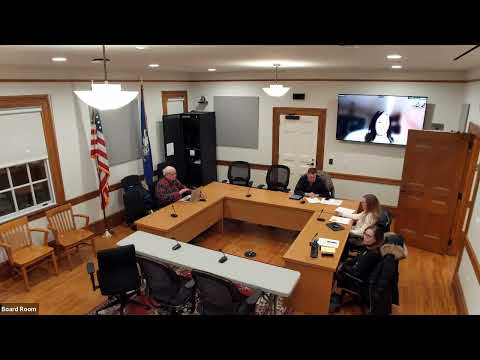
Affordable Housing Committee advances public outreach, discusses $225,000 predevelopment request to ready candidate sites
Summary
At its February meeting, the New Canaan Affordable Housing Committee set a public meeting for the week of April 20 and plans a follow-up online survey; the committee discussed a roughly $225,000 FY2027 predevelopment budget request to produce design documents and move chosen sites toward planning and approvals to meet a 2032 moratorium deadline.
At its February meeting, the New Canaan Affordable Housing Committee reviewed work by its project subcommittee on three candidate development sites, set a target for a public meeting the week of April 20 and outlined a public-education strategy followed by a SurveyMonkey questionnaire to gather resident feedback.
A project subcommittee member told the committee the subcommittee had met twice since December, that consultants presented two concept site plans for each of the three top-ranked parcels, and that the group had developed a target schedule intended to keep the effort on track. "We're going to try and have a public meeting the week of April 20," the subcommittee member said; the committee agreed the public meeting should come before the online survey so residents have the same briefing and background before responding.
The subcommittee asked the finance members to prepare a short menu of financing options so the public can gauge the town's potential exposure. During discussion the committee referenced a rough planning placeholder used for public context — "very big ballpark numbers" — including about $550,000 per unit and $30,000 per parking space, and said any outreach materials should be qualitative and explain trade-offs rather than present final figures.
Committee members also described the site-selection process they plan to present to the public: a town GIS consultant mapped town- and state-owned parcels and parcels over five acres, scored them for sewer and water access, walkability to downtown and transit, proximity to schools and parks, and applied penalties for steep slopes and wetlands. The highest-scoring, feasible parcels were advanced for further study; committee members named Morse Court and Richmond Hill among locations discussed.
The group discussed a FY2027 budget request of about $225,000 to fund predevelopment work — design drawings, masking/massing studies, and preparation of level-of-construction documents necessary for planning-and-zoning review. Committee leaders said that work would be town expenditures to ready a project for approval, not direct construction dollars, and that other local funding sources (the housing authority or the affordable housing trust) were unlikely to cover the full amount. The chair said the request has been submitted to town staff for consideration and that initial reactions included surprise at the magnitude of the figure.
Committee members framed the timing as driven by the moratorium window. They said design and planning tasks need to occur in fiscal year 2027 to allow sufficient time to prepare funding applications (members cited starting a funding application to the state housing agency by March 2028), complete 90% construction documents, and secure approvals so units could be occupied before the 2028–2032 moratorium window closes. Members warned of procedural risks — public comment periods and possible denials in moratorium or funding applications — and emphasized building extra time into the schedule.
The committee agreed to publicize the April meeting broadly, use an FAQ page and local media, and explore non-town mailing lists and library sign-ups to reach residents. The committee also said it will circulate more detailed analysis and the GIS scoring methodology to the full committee and the public before the meeting.
What happens next: the committee will finalize outreach materials, ask the finance subcommittee for a summary of financing options to accompany public materials, circulate the draft survey to the full committee (mindful of FOIA rules about reply-all) and seek selectmen and board-of-finance input after the committee reaches a recommendation.