
Officials warn Frederick County school bus fleet is aging and leave the district with 'zero spare buses'
Get AI-powered insights, summaries, and transcripts
Subscribe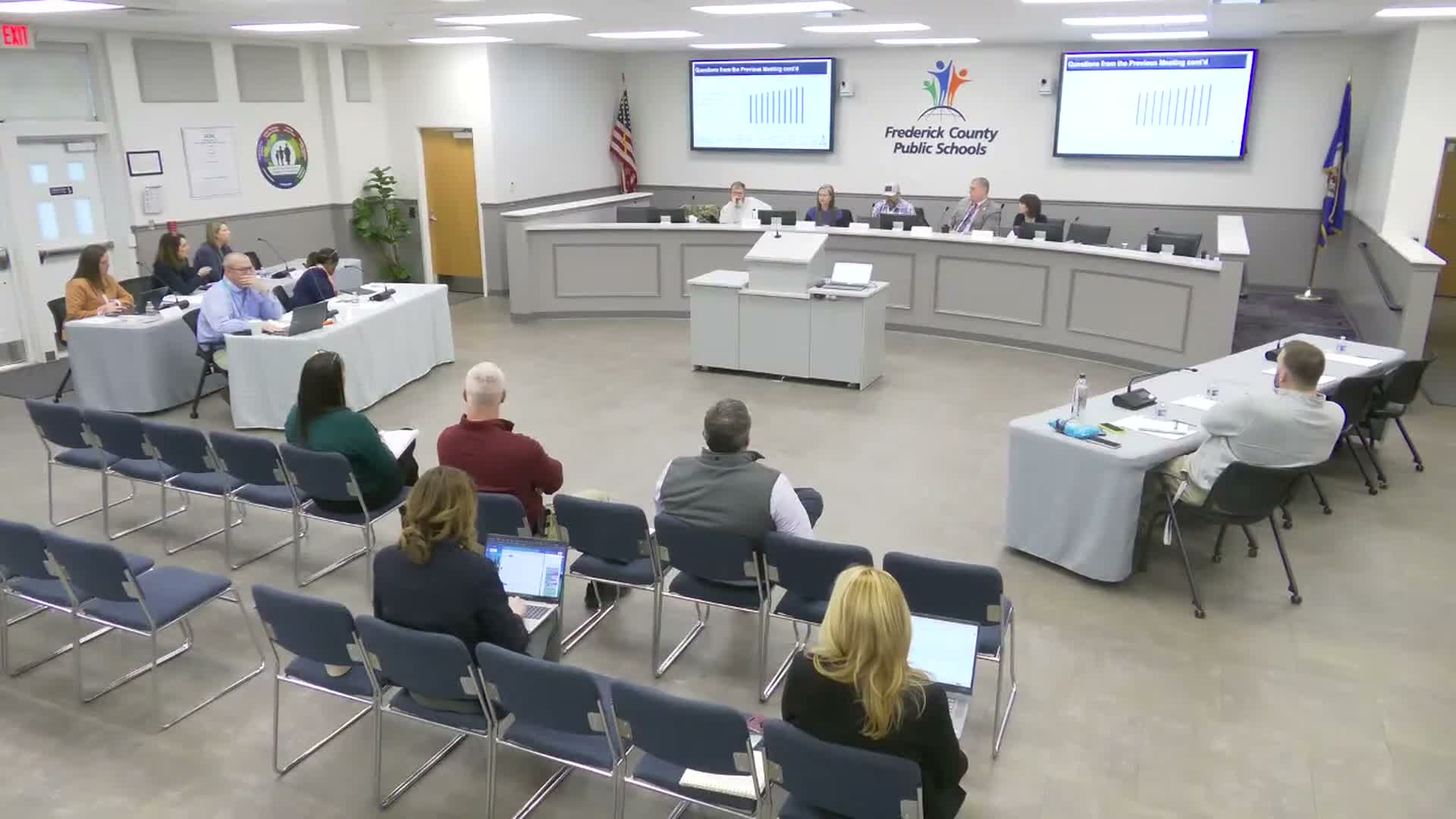
Summary
Transportation staff told the finance committee that 42% of the district’s buses are at or past a 15-year replacement cycle, repair costs rise with age and the division currently has no spare buses. Staff proposed adding one replacement bus if fully funded and planning a ridership survey and route optimization to reduce routes.
Transportation and budget staff told the finance committee on Feb. 9 that the district’s bus fleet is older than recommended and that the division currently operates with no spare buses available for emergency substitution.
Ms. Anderson introduced the transportation request asking for one replacement bus to raise the funded fleet from 11 to 12 if fully funded. Mr. Thompson said a common replacement cycle is 15 years and that a “considerable number of buses” exceed that age, raising maintenance costs and operational risk.
“Really, it becomes...not good fiscal sense to keep buses on the road,” Mr. Thompson said, adding that some cost-per-mile examples reach about $3.04, $5.06 and in some cases roughly $7. He warned: “we literally have 0 spare buses available,” which can lead to double, triple or quadruple runs and delayed student transportation when buses fail.
Operational options: staff said they use routing software and plan to run a ridership survey later in the year that would allow families to opt out of service if they will not need it. The default will remain that students are scheduled for bus transportation unless a parent opts out. Staff cautioned that consolidating routes is limited by long distances (30–45 minutes on some runs) and that opt-outs are unlikely to fully solve capacity or spare-bus shortages.
Funding and history: presenters said before the Great Recession the division had recurring funds to replace 13 buses per year; after the recession the replacement program ended and the division has rebuilt slowly, currently funding 11 replacement buses while an average 15-year replacement cycle suggests a replacement rate closer to 20 per year.
Next steps: staff will pursue partnerships to acquire buses, run the ridership survey and return with routing and cost estimates. The transportation shortfall is part of larger budget scenarios under review by the finance committee.