Get Full Government Meeting Transcripts, Videos, & Alerts Forever!
Get email alerts on the Railroad Right Of Way topic
No spam. Unsubscribe anytime.
Panama City holds first reading of ordinance to make rail companies maintain right-of-way
Summary
At a Feb. 10 public hearing the commission heard the first reading of Ordinance 32-99, which would require railroad owners to maintain vegetation, drainage and nuisance control along railroad rights of way and allow the city to abate and invoice the railroad after 30 days' notice.
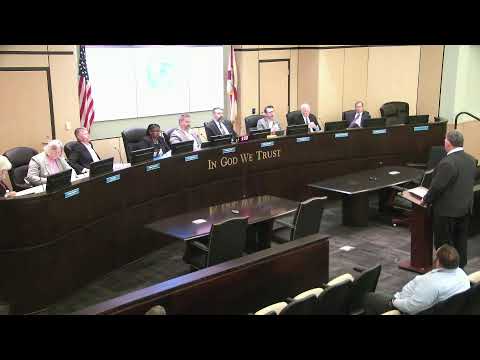
The Panama City Commission on Feb. 10 took the first public reading of an ordinance that would require railroad owners and operators to maintain vegetation, drainage and nuisance control along railroad rights of way within city limits.
Natalie McSwain, representing the city and identified as counsel with Berkeley Law Firm, said the ordinance is intended to make it easier for the city to recover costs when rights of way become overgrown. “This is a first reading for discussion,” McSwain said, explaining the measure would require a 30-day notice before the city could perform abatement and then invoice the railroad for costs. If unpaid, those costs would be placed on the city’s nuisance assessment roll.
The ordinance, listed on the agenda as Ordinance 32-99, would add a new article to Chapter 12 to define vegetation, drainage and nuisance maintenance obligations outside the immediate ballast area. McSwain noted federal regulations already require railroads to maintain their rights of way but that municipalities cannot directly enforce federal rules; the local law is intended to provide a municipal enforcement mechanism.
Members of the public urged broader options for the corridor during the audience participation part of the hearing. Derek Thomas urged the commission to consider converting sections of the rail corridor into a public pathway and rails-to-trails connection, saying the city had declined an opportunity “more than 10 years” ago to develop the corridor for public use.
The item was presented as a first reading, and staff and the city attorney indicated they will return with additional details and any edits before a future vote. No final vote on adoption occurred at the meeting.