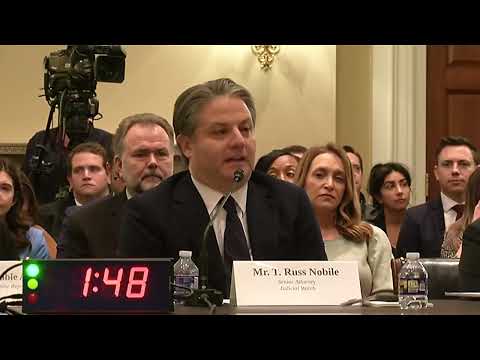
House Administration Committee hearing centers on voter-list maintenance, state voter ID experiences
Loading...
Summary
At a House Administration Committee session, witnesses and a committee member discussed H.R. 7,300 (the MEGA Act amendment), state voter ID experiences and limits of the National Voter Registration Act (NVRA), with witnesses describing implementation challenges and legal constraints on removing registrants from voter rolls.
An unidentified committee member at a House Administration Committee hearing presented Ohio’s election rules as a potential national model and asked witnesses about the practical and legal hurdles of changing voter-list maintenance at the federal level.
The committee member said Ohio has “implemented basic requirements to prove you are a US citizen, a resident of the state, of legal voting age,” and argued those measures have produced “transparent and trustworthy elections” and timely results. He also cited H.R. 7,300 (referred to in the hearing as HR 7,300) as a proposal to update voter-list maintenance rules.
Mr. Grey, identified in the transcript by name, described the state-level experience of adopting voter-identification and proof-of-citizenship rules. “It took us 4 years to get that through,” he said, and added that Wyoming enacted a voter ID law in 2021 after the 2020 election highlighted statutory gaps.
Another witness summarized federal-law constraints on removing registrants from voter rolls. The witness said the NVRA (National Voter Registration Act) limits removal options largely to change of address and death and noted a recent Supreme Court decision out of Virginia that affected timing and procedural questions around list maintenance. The witness described the MEGA Act amendment under consideration as changing periodic, reasonable-effort requirements into more specific duties, drawing a parallel to Congress’s earlier Move Act response to problems with UOCAVA ballots.
The committee member pressed whether change-of-address rules and other list-maintenance practices had been litigated; the witness discussed the legal and administrative tensions but did not report a formal, binding change to NVRA language within the hearing record. The committee member said he supported a uniform baseline standard for voter-list maintenance across states and indicated he would be an original cosponsor of the measure under discussion.
No formal votes or motions appear in the transcript excerpt. The hearing record includes references to filed lawsuits and letters submitted for the record opposing some aspects of the proposal; the transcript ends with the committee member yielding back his time and stating cosponsorship.
The committee is considering amendments that members and witnesses say would narrow or specify federal list-maintenance duties; witnesses described both legal limits and practical implementation challenges at the state level as part of the exchange.