
Martin County board affirms acceptance process for Sewell’s Point sewer work after heated debate
Get AI-powered insights, summaries, and transcripts
Sign Up Free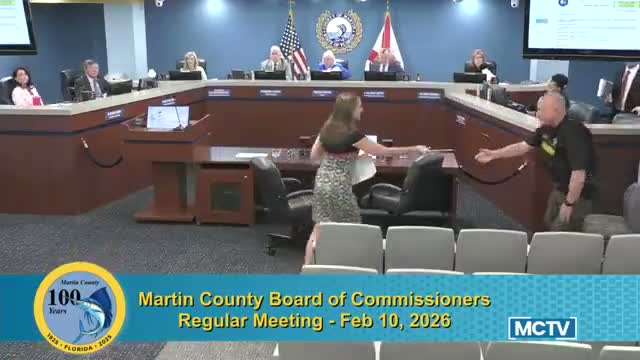
Summary
After public allegations that a Sewell’s Point engineering report was withheld or altered, the county voted 3–2 to accept the town’s completed sewer infrastructure into county utility ownership once construction is certified; commissioners split over concerns about transparency, survey data and connection costs.
The Martin County Board of County Commissioners voted 3–2 on Feb. 10 to accept, after completion and certification, sewer infrastructure that the town of Sewell’s Point is installing under a federal grant and a town‑county interlocal agreement.
Town Manager (Sewell’s Point) Vinnie Daniels told the board the town contracted a Giffels Webster feasibility study and later conducted a town survey of 355 households; he said 75% of respondents indicated they would connect within three years and that the town adopted a non‑mandatory hookup/no‑assessment policy for residents. Daniels said construction began in January because grant funds expire in June, and multiple contractors are working to meet that deadline.
The vote followed a public comment period in which Sewell’s Point resident Mona Leonard accused the town engineer, Joe Capra, of blocking public access to the Giffels Webster study and of misrepresenting resident support. "Please stop the corruption and do not agree to give Sewell's Point more sewer hookups," Leonard said during public comment.
Town engineer Joe Capra and county staff responded that the Giffels Webster material exists and has been used as backup for the town's engineering work. Capra said the town also produced its own study incorporating Giffels Webster as an appendix and that the town mailed survey forms to each affected property. "I hired Giffels. Let me be honest with you, Giffels is a great engineering firm," Capra said, describing the studies and the town's decision to pursue a grinder/connection program that avoids mandatory assessments.
Commissioners divided on process and timing. Commissioner Campey, who moved to accept staff's consent‑agenda recommendation that the county will accept the infrastructure after completion, said the November municipal vote and staff review supported moving forward and stressed the environmental benefits of reducing septic systems near waterways. Commissioner Vargas and Chair Hurd dissented, citing unanswered questions about the report’s availability, inconsistencies in survey results and a desire for more direct resident outreach.
Board and staff confirmed how connections will work if infrastructure is certified: residents seeking service will apply to Martin County Utilities and pay a connection fee that county staff discussed as roughly $7,000–$12,000 depending on grant incentives and timing. County staff also noted the project includes resilience work such as road‑raising and stormwater retrofits in addition to sewer line installation.
The county directed Sewell’s Point officials and the town engineer to appear before the board earlier in the meeting after initial public objections; the board ultimately adopted the acceptance motion 3–2 with Vargas and Hurd voting no.
The next procedural step: county staff will accept certified infrastructure and post notice of sewer availability; individual property owners will then decide whether to connect and pay the applicable connection fee.