Get Full Government Meeting Transcripts, Videos, & Alerts Forever!
Get email alerts on the Nuclear Waste Vitrification topic
No spam. Unsubscribe anytime.
Presenter describes vitrification plan to turn more than 55 million gallons of waste into glass in Southeastern Washington
Summary
An unidentified presenter outlined vitrification — converting nuclear waste into borosilicate glass — and said the process aims to treat "over 55,000,000 gallons" of waste at a site in Southeastern Washington; the speaker also described personal involvement in developing the plant.
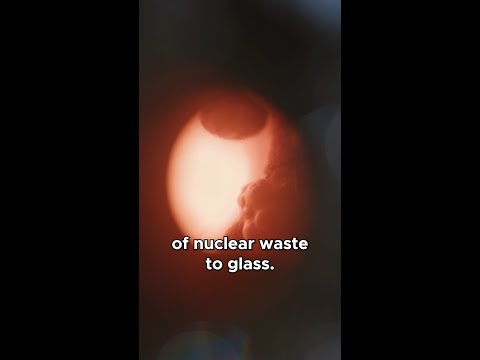
An unidentified presenter described vitrification as "the conversion of nuclear waste to glass," and said the technology is being used in Southeastern Washington to process "over 55,000,000 gallons of nuclear waste." The speaker characterized the outcome as "a permanent long term solution."
The presenter explained the waste would be immobilized in a material "primarily a borosilicate glass, so much similar to what you might consider, as Pyrex." The comment was offered to convey the chemical durability and physical form of vitrified waste.
On technical development, the presenter said, "I was directly involved with a lot of the development of new strategies to help circumvent the challenges with the GFR facilities." The transcript did not define the acronym "GFR," and no further explanation was provided during the excerpt.
Speaking about career background, the presenter said they "actually started researching in this field as a high school student" and later "earned my PhD," adding that they are "directly involved with the design and enhancement of this plant." The remarks conveyed a long-term personal and professional engagement with the vitrification effort.
The presentation excerpt closed on a personal note: "That for 1 is 1 of the things that I'm most proud of," the presenter said.
The excerpt contains technical descriptions and claims about scale and permanence that were attributed to the presenter; the transcript does not identify the speaker by name or by organizational affiliation, and it does not define "GFR."