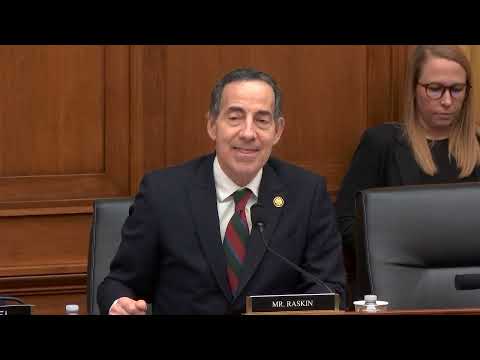
Witness at House Judiciary hearing says First Amendment already prevents imposition of religious law
Loading...
Summary
An unnamed participant at a House Judiciary Committee hearing argued that existing First Amendment protectionsthe establishment clause, the free exercise clause and the ban on religious testsalready bar government endorsement or imposition of any sectarian law, calling proposed anti-Sharia measures unnecessary and politically motivated.
Unidentified Speaker, an unnamed participant during a House Judiciary Committee hearing, told the panel that the Constitution already forbids the government from imposing religious law and that special legislation targeting "Sharia" is unnecessary.
"We don't need the anti Sharia and anti Muslim legislation our friends are proposing today because our constitution already forbids theocratic imposition and establishment of any kind at all," the speaker said, urging the committee to rely on the First Amendment's protections.
The speaker framed the argument around three constitutional provisions: the establishment clause, the free exercise clause and the clause barring religious tests for public office. He said those provisions, and existing Supreme Court precedent, already prevent government endorsement of any particular religious text or sectarian code.
Citing the Supreme Court's decision in Stone v. Graham (1980), the speaker argued that recent state laws requiring posting of the Ten Commandments in public buildings would be unconstitutional. He also cited Church of Lukumi Babalu Aye v. City of Hialeah (1993) to note that the Court permits neutral general laws but forbids statutes that target a particular religion, quoting Justice Kennedy's concept of "religious gerrymandering." The speaker also referenced Kiryas Joel Village School District v. Grumet (1994) to illustrate that the Court has rejected endowing a religious group with secular governmental power.
Using hypotheticals, the speaker said that if a government tried to post "core principles of Sharia law" in schools, existing case law would provide a remedy. He questioned which sectarian version of a religious text the government could lawfully endorse, noting variations in the Ten Commandments across faith traditions.
The speaker criticized what he characterized as the political motives behind anti-Sharia bills and warned against actions that would single out Muslims or block them from participating in government, citing calls targeting Representative Ilhan Omar as an example of conduct that would violate constitutional protections.
He closed by urging the committee to focus on other matters of public policy and oversight and yielded back to Chairman Wright.
The hearing proceeded after the speaker concluded his remarks; no formal vote or motion on anti-Sharia legislation was recorded in the transcript.