Get Full Government Meeting Transcripts, Videos, & Alerts Forever!
Get email alerts on the Admin Inspection Warrants topic
No spam. Unsubscribe anytime.
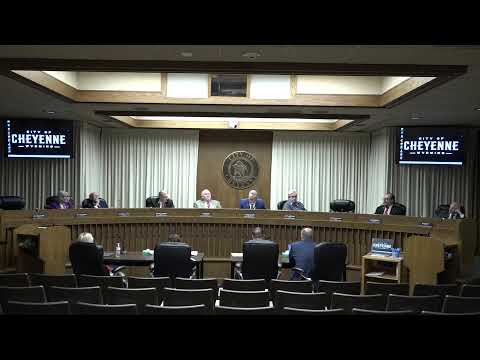
Cheyenne council adopts administrative inspection‑warrant ordinance after tight debate over wording
Summary
After hours of testimony and legal objections, Cheyenne’s governing body amended and approved an ordinance authorizing limited administrative inspection warrants for four narrowly defined situations — abandoned buildings, inspections tied to building permits, post‑fire investigations and scheduled commercial fire inspections — and added a reporting requirement to increase transparency.
The Cheyenne governing body approved an ordinance on third reading that creates a limited administrative inspection‑warrant procedure for narrowly specified circumstances, following intense public comment and legal debate over a line that opponents warned could authorize unconstitutional "general warrants."
Patricia McCoy, representing several residents who spoke to the council, urged the removal of the words "determine" and "discover" from the ordinance text, arguing those terms would allow fishing expeditions into private property contrary to Wyoming constitution precedent. "If an inspector does not already have probable cause that a specific violation exists, they have no business asking a judge for a warrant to go discover one," McCoy said.
City Attorney John Brody and other supporters said the text, read in context and constrained to four enumerated reasons for warrants, did not raise constitutional concerns. Nonetheless, the council amended the draft: it struck the words "determine" and "discover," tightened language on probable cause and added an incident‑report requirement so the council receives a report after each executed administrative warrant.
Why it matters: The ordinance provides an enforcement tool for the fire marshal and chief building official when they cannot obtain owner cooperation in limited circumstances — for example, to inspect abandoned structures, to complete required commercial fire inspections or to investigate a building after a fire when an owner cannot be located.
What opponents said: Several speakers and a number of council members warned the ordinance could be vulnerable to litigation without a surgical change, urging removal of "discover" to preserve constitutionality and avoid invalidation of the whole chapter. One speaker suggested a sunset clause and mandatory audits; others said the substitute text and the added reporting requirement would provide needed safeguards.
Council action and vote: After debate and a motion to remove the words "determine" and "discover," the governing body adopted that amendment and approved the ordinance on third reading. Councilmembers Rennie, Esquivel and Moody voted no on final passage; council agreed to a reporting requirement that the city clerk produce an incident report following any executed administrative inspection warrant.
Implementation: City staff said the ordinance is intended to be used rarely — for true enforcement gaps such as inaccessible owners or abandoned buildings — and that ordinary inspections and permit processes remain the primary tools of compliance.
The ordinance took effect upon adoption; the council added direction that staff present administrative guidance to implement the reporting requirement.