Get Full Government Meeting Transcripts, Videos, & Alerts Forever!
Get email alerts on the Public Art topic
No spam. Unsubscribe anytime.
Liberty Hill committee recommends tighter mural application rules, community outreach and maintenance plans
Summary
The Downtown Revitalization Committee said its newly completed water-tower and generator murals revealed gaps in the draft Certificate of Appropriateness (COA) application and guidelines, and recommended adding community-outreach documentation, cleaning/maintenance instructions and minimum life-cycle expectations before wider rollout.
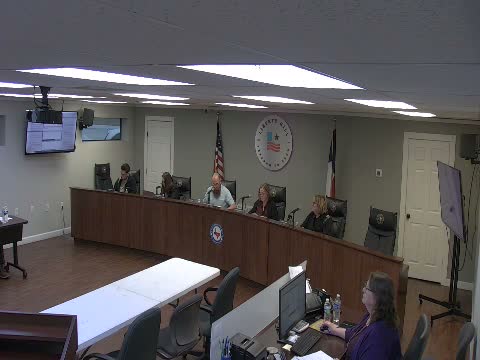
The Liberty Hill Downtown Revitalization Committee on Jan. 28 discussed next steps after completion of two high-profile public artworks — a water-tower mural and a generator mural — and recommended changes to the city's COA application and mural guidelines to better document outreach, maintenance and durability.
A presenter for the committee said both murals have received "really, really good feedback" while noting a single negative comparison; that member said the mural projects provided a test case to review the COA application and the draft guidelines. "When we ask for supplemental items, two things that I recommended were adding a detailed outline of public outreach and community engagement ... and adding a cleaning and maintenance instructions," the presenter said during the meeting.
Committee members agreed those items would help ensure murals are durable and have community backing. Speakers emphasized including either a life-span expectation or contract language requiring maintenance visits and touch-ups during a defined period; members cited five years as a common baseline for lifecycle review. One committee member said applicants could indicate expected materials and longevity in their letter of intent so staff and reviewers can judge whether a proposal "checks the box."
The committee discussed whether a single, combined art application should remain in place or whether the city should create a mural-specific application distinct from sculpture and other public-art processes. Several members suggested a mural-specific COA could reduce ambiguity about what qualifies as art vs. signage, and make it easier to collect mural-specific information such as outreach steps and maintenance plans.
Staff noted the city will accept COA applications and supporting documents through the online permitting portal (mygovernmentonline.org) and that fees would be collected through that system. Committee members also asked for clarity on appeals: staff said appeals of COA decisions would go to the Board of Adjustments (BOA), a body the city is forming to receive those appeals.
Members debated whether community outreach should be mandatory. The committee settled on keeping outreach documentation on the application as information staff should review, with the caveat that some proposals may trigger additional outreach or hearings depending on scale, location or community concerns. "It may spur the applicant to want to get ahead of that and see what the feelings are," a member said.
The committee also discussed encouraging partnerships with local schools and using festival opportunities to involve students and temporary murals as education and engagement exercises. Staff and members said they would incorporate the feedback into a revised COA packet and bring a draft back to the committee for review before recommending the package to city council as part of the ongoing UDC rewrite.
What happens next: staff will revise the COA guidelines and application to add outreach and maintenance items, consider a mural-specific application form, and circulate the draft to the committee for further comment before forwarding a package to city council.