Get Full Government Meeting Transcripts, Videos, & Alerts Forever!
Get email alerts on the Tax Increment Reinvestment Zone topic
No spam. Unsubscribe anytime.
Liberty Hill staff to draft ordinance after council backs smaller downtown TIRs boundary
Summary
City staff told the Downtown Revitalization Committee that City Council on June 11 directed staff to proceed with the DRC’s recommendation to shrink the tourist/TIRs boundary while keeping the participation rate at 50%; staff said an ordinance combining boundaries and the project plan will return to council for approval.
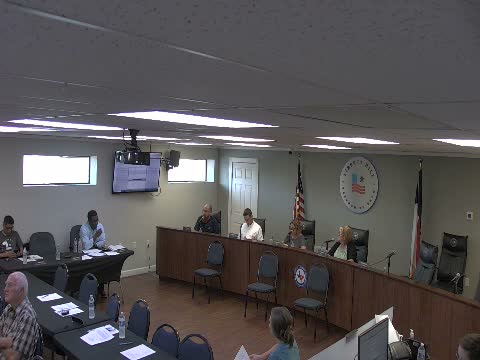
City staff told the Downtown Revitalization Committee on June 24 that City Council had endorsed the committee's recommendation on the city's proposed tourist tax increment reinvestment zone (TIRs), but did not adopt a final ordinance.
Mike, a city staff member, said the June 11 council meeting "unanimously approved, directed staff to move forward with the DRC's recommendation, which was to modify the, tourist boundary, to make it a little bit smaller, and then also to keep the participation rate at the same level, 50%." He told the committee the council's action was guidance rather than final approval and that staff will return with an ordinance that pairs amended boundaries and a project plan.
The next step, Mike said, is for staff and the DRC to develop a project plan consistent with the downtown master plan and include that plan with an ordinance for council consideration. "We have not completed the project plan yet," he said, and the ordinance will present the boundaries and the project plan together for council approval.
DRC members discussed coordination with other master-plan elements. Staff emphasized that projects funded through the TIRs should align with existing plans such as the downtown master plan and the city's tree and economic development plans. Daniel Scott, who attended the June 11 council meeting, was thanked by staff for representing the DRC at council.
City staff framed the TIRs as a tool to ensure downtown investments remain consistent over time as council membership and policy priorities change. A staff representative said the TIRs would not necessarily generate large near-term revenue but could serve as a reimbursement mechanism over the life of the TIRs to pay back initial downtown investments.
The DRC did not take formal action on an ordinance at the meeting; staff asked for direction on how to proceed with project-plan drafting and community engagement before returning to council.
What’s next: staff will work with the DRC to prepare a project plan consistent with the downtown master plan and present an ordinance combining boundaries and the project plan to City Council for final approval.