Get Full Government Meeting Transcripts, Videos, & Alerts Forever!
Get email alerts on the Muds Annexation topic
No spam. Unsubscribe anytime.
Council discusses MUDs, annexation and infrastructure liability after legislative changes
Summary
Council members discussed municipal utility districts (MUDs) — their debts, maintenance liabilities, and how recent regulatory changes may prevent acceptance of roads from new MUDs — and weighed when annexation would benefit the city. Staff recommended cost-benefit analysis before any annexation.
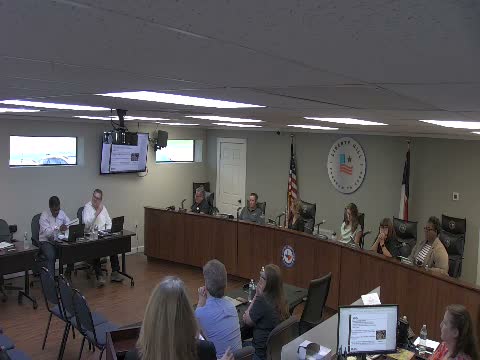
Liberty Hill council members and staff spent a portion of their April 9 workshop reviewing municipal utility districts (MUDs), including who pays for construction and maintenance, how MUDs interact with city utility service areas and the implications of recent regulatory changes.
The city attorney said MUDs are separate governmental entities that commonly issue debt and are regulated by state agencies; because the city holds a Certificate of Convenience and Necessity for wastewater in areas taken over from LCRA, Liberty Hill now owns and maintains many lines that were originally built for MUD service areas. That can create long-term maintenance obligations for the city after annexation.
Speakers singled out operational problems such as recurring lift-station failures and construction-quality issues. Public works superintendent Matt Brown (referenced by staff) was identified as tracking lift station issues; Deputy City Manager Mike Gatien said some lift stations built by MUDs have quality problems and that the city inspects when it takes systems into its network.
Participants referenced a recent change (described as occurring in March) that would mean some new MUDs will no longer be able to transfer roads to the county, leaving MUDs responsible for road CIP and maintenance. An unidentified participant warned that annexation requires careful cost-benefit analysis — factoring debt service, deferred maintenance and tax revenue — and suggested the city develop a standard, high-quality development agreement to use as a benchmark.
Council and staff agreed on next steps: obtain debt-paydown status for MUDs (Santa Rita was specifically referenced), evaluate operating agreements and asset-dedication histories, and prepare analyses to guide any future annexation decisions.
The workshop adjourned at 5:44 p.m.; council reconvened for its regular meeting at 6:00 p.m.