Get Full Government Meeting Transcripts, Videos, & Alerts Forever!
Get email alerts on the Utilities topic
No spam. Unsubscribe anytime.
Finance director flags $900,000 wastewater charge, AWPF payment and dozens of MUD agreements
Summary
Finance director told council a recent $900,000 wastewater expense has been budgeted for FY26 and that the city paid an $8.9 million AWPF payment; he warned dozens of older MUD agreements still need review and recommended rate studies and reallocation of indirect costs.
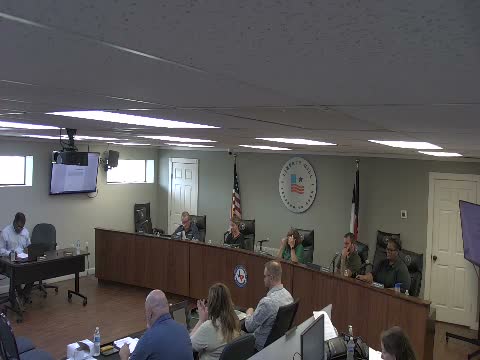
At the Liberty Hill budget workshop, Finance Director Josh walked council through corrections to the utility funds and warned of lingering contractual and budget risks tied to wastewater and municipal utility district (MUD) agreements.
Josh said staff corrected missing contractual services entries and removed franchise fees from the utility budget. He described a defensible mechanism for indirect cost allocation, said a new rate study will be programmed for water and wastewater, and recommended using lease‑purchase arrangements for heavy machinery rather than paying cash.
On recent cash flows, Josh said staff recently delivered an $8,900,000 payment for the AWPF project to the county courthouse. “We drove Sarah and myself to the county courthouse to drop off a check in the amount of $8,900,000 for the court of record. That was all for AWPF,” he said. Josh also told council the wastewater budget now includes a previously unbudgeted $900,000 expense and that total exposure could be up to $1.5 million. He said staff cannot yet confirm whether similar obligations exist in other MUD agreements and estimated a multi‑year effort to review roughly 25–30 agreements if done one‑by‑one.
Council members asked whether the $900,000 claim arose from a vendor demand; Josh said the claim was presented to finance staff and that earlier contract reviews should have identified timing and obligations. He said staff will accelerate the agreement reviews but cautioned that, by current resourcing, a full line‑by‑line review could take years without process improvements.
Josh said utility fund edits freed a little over $400,000 for the supplemental list and that wastewater can likely accommodate most of its supplemental requests, but water cannot absorb all its asks. He recommended completing rate studies to make sure each enterprise fund covers its expenses and aligning engineering and project costs with the appropriate CIP budgets.
Next steps: staff will proceed with the rate studies and prioritize reviewing MUD agreements and project‑versus‑operational engineering charges as part of the FY26 budget process.