Get Full Government Meeting Transcripts, Videos, & Alerts Forever!
Get email alerts on the Alcohol Licensing topic
No spam. Unsubscribe anytime.
Huntsville amends alcohol ordinance after state law limits local liquor-license fees
Summary
Council adopted an amendment to Chapter 6 of the city code to stop collecting local liquor-license fees for some establishments after state changes reduced the eligible fee base; the code will retain a certification process and require a scale drawing to confirm distances from schools and churches.
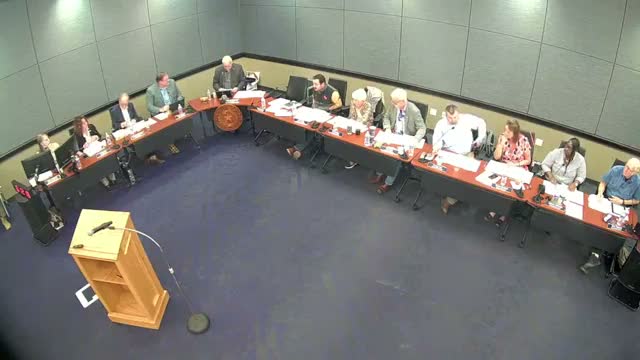
The Huntsville City Council voted Feb. 3 to amend Chapter 6 of the city’s alcoholic beverages code in response to changes in state law that limit municipalities’ ability to collect liquor-license fees for establishments that already pay a food-service permit fee.
City staff explained that before Senate Bill 1008 passed the Legislature, the city could collect 50% of state-published liquor-license fees. Staff told council that, under the new calculations, the city would be able to collect a fee from about 10 of the 111 liquor licenses currently on the city roll. Staff estimated that the city historically collected about $32,034 over two years from those permits but would now collect "less than $3,500 over 2 years." Speaker 10 recommended the city cease collecting the fee and instead certify that an establishment is inside city limits and an allowed location.
The proposed amendment removes local fee collection for those licenses and adds a requirement that applicants submit a scaled drawing showing the front-door-to-front-door distance to nearby churches or schools; the code language distinguishes the calculation method used for churches versus schools. Councilmembers said the change is a cost-saving measure because the administrative burden of collecting the smaller fee would outweigh the revenue.
The council waived the second-reading requirement and adopted the ordinance by unanimous voice vote (no roll-call tallies were read in the transcript).