Get Full Government Meeting Transcripts, Videos, & Alerts Forever!
Get email alerts on the Executive Session Lawsuit topic
No spam. Unsubscribe anytime.
Legislative Management Committee votes to enter executive session over term-limits lawsuit
Summary
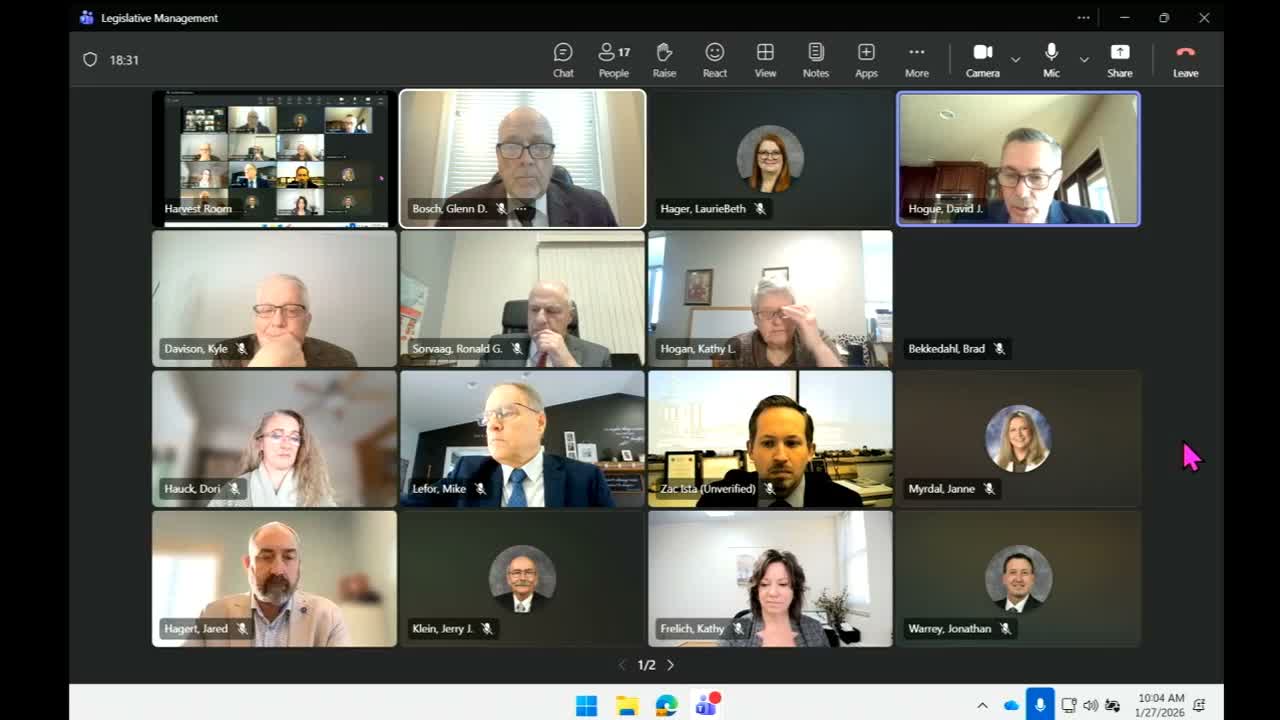
The Legislative Management Committee voted to enter an executive session to discuss legal strategy after the legislative assembly was sued by two individuals over a term-limits constitutional measure. The motion was moved, seconded and carried on a roll call; the live feed was paused to change recording.
The Legislative Management Committee voted to enter an executive session to discuss legal strategy after the legislative assembly was sued by two individuals over a constitutional term-limits measure.
Chairman (unidentified) told members that "the legislative assembly has been sued by, 2 individuals," and said the question of whether the legislature should hire separate counsel arises from the complaint. "Under the law, we are entitled, if we're going to discuss legal strategy and legal issues, the law does authorize us to go into a closed meeting and go into executive session to have frank and candid discussions about this issue," the chairman added.
The committee considered a motion to go into executive session to discuss legal strategy. The motion was recorded as moved by Marydell and seconded by Hogan. Clerk Mr. Bjornsson conducted a roll call; members responded in the affirmative and the clerk announced, "Motion carried, mister chairman." The transcript records affirmative responses ("Aye"/"Yes") during the roll call for the members called.
No debate or alternative proposals were recorded in the transcript before the vote. After the motion carried, staff asked for a brief pause "to stop the live feed and change the recording and get the room ready" before the executive session began.
The meeting record in the transcript does not specify any vote counts beyond the roll-call answers, does not name all responding members in a single tally in the public record, and does not record any formal decision on hiring specific counsel. The action taken at the open meeting was limited to approving entry into an executive session to discuss legal strategy; no public deliberation of that legal strategy appears in the public portion of the record.
The committee paused the public recording and live feed to prepare for the closed session; the transcript ends with that administrative pause and does not include the closed-session discussion.
The next public procedural step recorded in the transcript is the pause for recording changes; no further public votes or directives on counsel hiring are recorded in the available portion of the transcript.