
Lawmakers press Fish and Game on vacancies, salary adjustments and river closures tied to salmon declines
Get AI-powered insights, summaries, and transcripts
Sign Up Free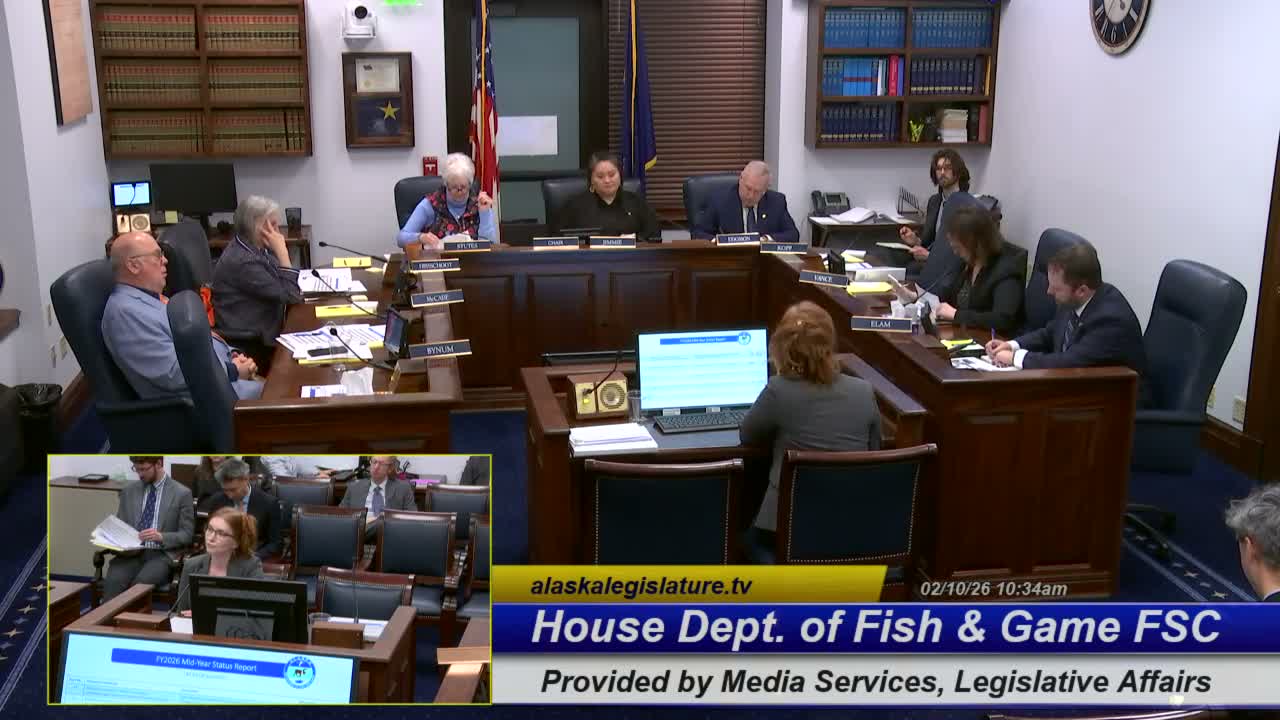
Summary
Lawmakers questioned whether a large FY26 salary adjustment and vacancy management will retain biologists and researchers amid significant river closures for king salmon; Commissioner Doug Vincent Lane said closures are necessary for sustained yield and that multiyear studies are underway, but acknowledged economic consequences and staffing pressures.
Representatives pressed the Department of Fish and Game about staffing levels, salary adjustments and recent broad river closures that the department says are necessary to protect king salmon stocks.
Representative Vance asked how many long‑term vacancies the department has. Bonnie Jensen said the agency has eight long‑term vacancies (five funded by federal or Fish and Game funds) and later clarified the department has about 50 vacancies overall but most are short‑term and in recruitment. Jensen added the vacancy rate is about 2% lower than the prior year.
Lawmakers also focused on a large FY26 salary adjustment number cited by the department — about $9.3 million — and whether it will help retain or attract biologists compared with federal pay scales. Commissioner Doug Vincent Lane said the lump‑sum payout to the largest bargaining unit and recent contract renegotiations drove the large figure and that the governor’s office provided money to agencies to make departments ‘‘hold harmless’’ rather than face immediate cuts. He said he is starting to see larger candidate pools for biologist positions.
Representative McCabe pressed the department on slide citations that attributed a $2.5 billion annual contribution to Alaska’s economy from sport fishing and asked how widespread temporary closures — including many Southcentral rivers to king salmon — will affect those values. Commissioner Lane said the closures are necessary for long‑term sustained yield and described ongoing and planned assessments, including juvenile micro‑tag studies and Equinox‑supported research, but said answers will take multiple years and that the economic impacts are significant.
Lawmakers asked the department to provide further documentation on salary adjustments, vacancy counts by funding source and the analytical basis for the economic contribution figures; the committee requested follow‑up in subsequent hearings.