Alaska Food Policy Council urges tribal input, clearer producer rules to boost local food access
Loading...
Summary
At a House Tribal Affairs hearing, the Alaska Food Policy Council highlighted that most food is imported, identified barriers to tribal participation in federal programs, and urged outreach on USDA producer definitions and streamlined permitting to increase access to federal funding and local processing capacity. AFPC said it will provide follow‑up materials to the committee.
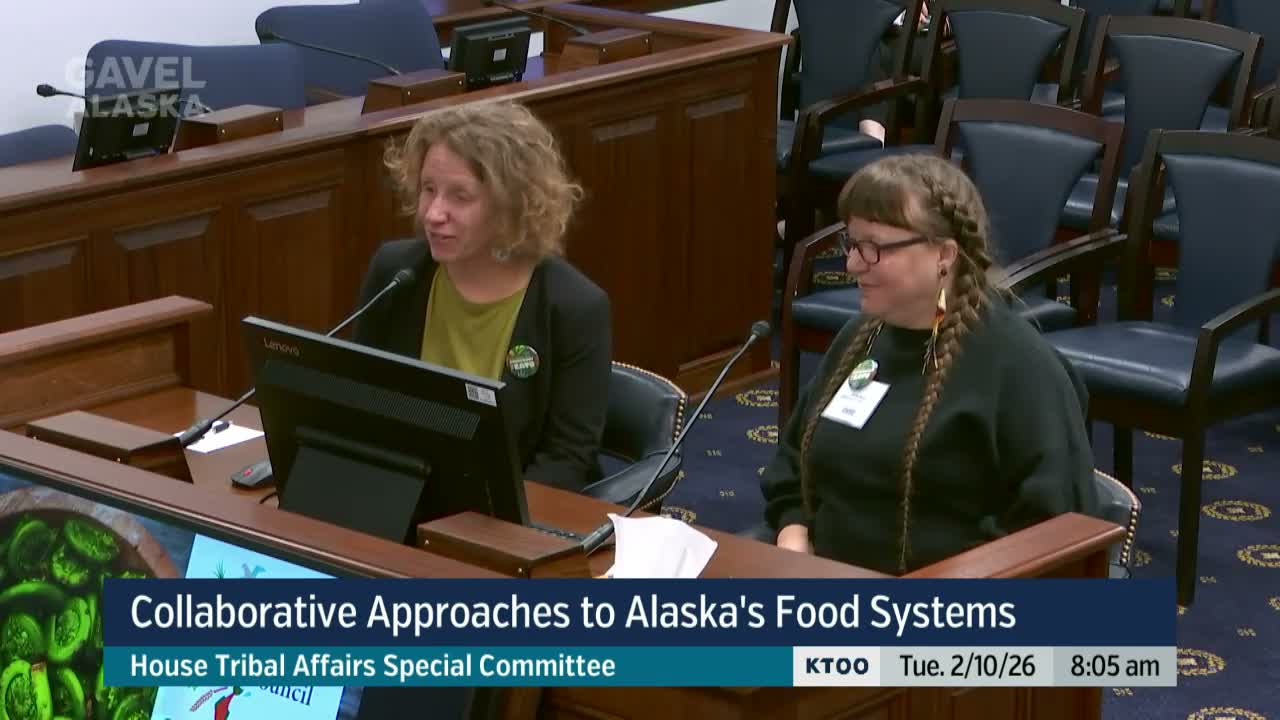
The Alaska Food Policy Council told the House Tribal Affairs Committee on Feb. 10 that Alaska’s food system depends heavily on imports and that tribal participation, clarified program rules and more local processing are central to improving food security.
Rachel Lord, advocacy and policy director for the Anchorage‑based nonprofit, and Executive Director Robbie Mixon briefed the committee on AFPC’s statewide work and tools, including a bill tracker and data dashboards. Mixon described AFPC as “a 501(c)(3) nonprofit started in 2014” that convenes producers, researchers, state agencies and tribal partners to develop policy recommendations and technical resources.
Why it matters: AFPC said about 95% of purchased food in the state is imported and cited a previously reported $2,000,000,000 figure for that trade (not adjusted for inflation). The council also emphasized the economic and cultural value of wild‑harvested foods, which it estimated at roughly $900,000,000 annually. The group argued that improving tribal access to federal programs and expanding local processing would keep more food dollars and food production in Alaska.
Tikhon Galbraith, vice chair of AFPC’s governing board and chair of the Indigenous Foods Working Group, told lawmakers the working group includes tribal dietitians, harvesters, traditional knowledge holders and policy advocates and that membership priorities shape the group’s agenda. “Food sovereignty is health sovereignty,” Galbraith said, arguing that tribal control and culturally aligned programming improve nutrition and community resilience.
Key discussion points: Galbraith described barriers that limit tribal access to federal funds and programs, including a lack of USDA‑certified processing facilities for inspected meats, confusing permitting and jurisdictional rules, and short comment windows during federal reorganizations that limit meaningful tribal consultation. He recommended more tribal representation in federal and state decision forums and pointed to co‑management successes, such as Ahtna Inter Tribal Resource Commission’s involvement in federal hunt management and pilot programs authorized by the 2018 Farm Bill.
On Farm Bill eligibility, Galbraith explained that USDA definitions of a “producer” have historically been tied to sale or potential sale thresholds and said a common rule of thumb has been the equivalent of $1,000 in product. He said that increased inclusion of tribal producers in the agricultural census could change future Farm Bill allocations and that AFPC has worked with FSA staff on outreach roundtables to demystify registration and eligibility.
Funding and next steps: Committee members asked about AFPC funding. Mixon said USDA grants have been major funders, supplemented by private foundations and Division of Agriculture match funding. He told the committee a $7,000,000 grant was terminated in July and that AFPC currently has about $50,000 remaining on a 1.5‑year matching project that supports related research; AFPC offered to share budget documents with the committee.
The committee requested AFPC provide the written lists of challenges and follow‑up materials referenced during the presentation. Chair Divert thanked the presenters and noted the committee will continue its food‑week agenda with a Food Bank of Alaska update later in the week.
A note on sourcing: The article quotes speakers and cites figures as presented to the committee. Some numeric items (for example, historical dollar totals cited by presenters) were reported by AFPC during the hearing and are presented here as stated by those witnesses.