Alaska DOC tells subcommittee FY26 growth driven by bargaining deals, fiscal notes and health costs
Loading...
Summary
Department of Corrections officials told the House Finance Committee corrections subcommittee that FY26 spending growth reflects collective bargaining salary adjustments and past legislative fiscal notes, combined with rising medical costs from an aging inmate population; DOC reported 2,115 authorized positions and a 14.6% vacancy rate.
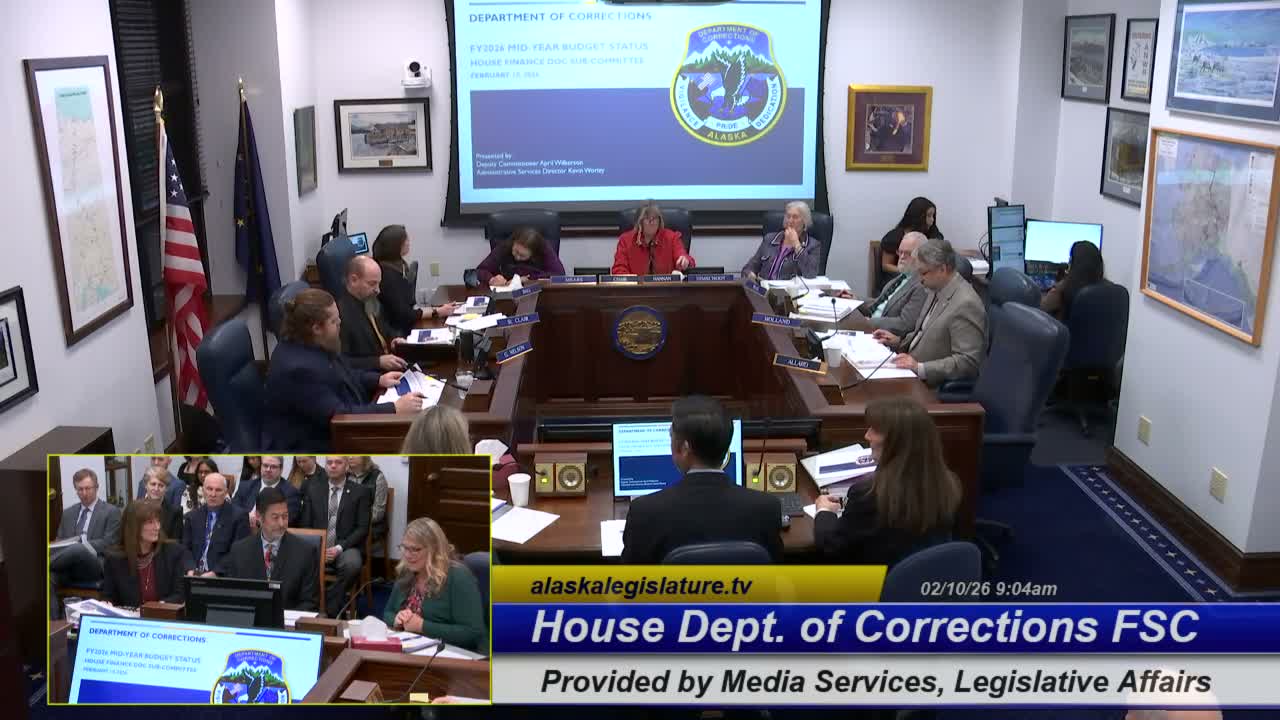
Representative Hannon convened the House Finance Committee corrections subcommittee on Feb. 10 to hear a FY26 midyear status report from the Department of Corrections. Jen Winkelman, commissioner for the Department of Corrections, said the department remains focused on public safety and improving outcomes amid statewide fiscal pressure and noted passage of HB 35 as a recent policy win.
April Wilkerson, deputy commissioner, told members the FY26 budget includes 2,115 permanent full‑time positions and a statewide vacancy rate of about 14.6 percent — roughly “just over 300” vacancies. Wilkerson said the department’s budget is approximately $489.9 million and that, over a 10‑year period, general fund growth totaled roughly $167 million.
Kevin Worley, administrative services director, and Wilkerson identified two principal budget drivers: roughly 30 percent of the increase is tied to salary adjustments in collective bargaining agreements and another roughly 45 percent results from legislative changes reflected in fiscal notes over the last decade. Worley described an FY26 increment for supervisory standby pay that stems from the APEA collective bargaining agreement for staff required to be available outside normal working hours.
Committee members pressed DOC staff for data on population trends and recidivism and for a breakdown of the population by pretrial versus sentenced status. Wilkerson said she would supply more detailed population figures in the committee’s scheduled deeper dive and observed that case‑resolution efforts from the courts have shifted some population flows. She also emphasized a separate cost driver: an aging, medically complex custody population that increases medical and staffing costs.
On audits and prior overspend, members raised the legislative budget audit finding of an $8 million overspend in FY24. Wilkerson said a portion of payroll that crossed fiscal years was not captured in the department’s FY24 calculations and that DOC is working with the governor’s office and the division of finance to finalize and ratify corrected FY24/FY25 numbers.
The subcommittee requested more detailed packeted data on population trends, the recidivism reporting methodology (DOC uses a three‑year post‑release window), and the specific drivers behind vacancy and overtime costs; DOC agreed to provide that material and to present a deeper dive during the committee’s next scheduled session.