
Senate Finance hears bill to reopen defined‑benefit pensions; actuary warns modeling assumptions matter
Get AI-powered insights, summaries, and transcripts
Subscribe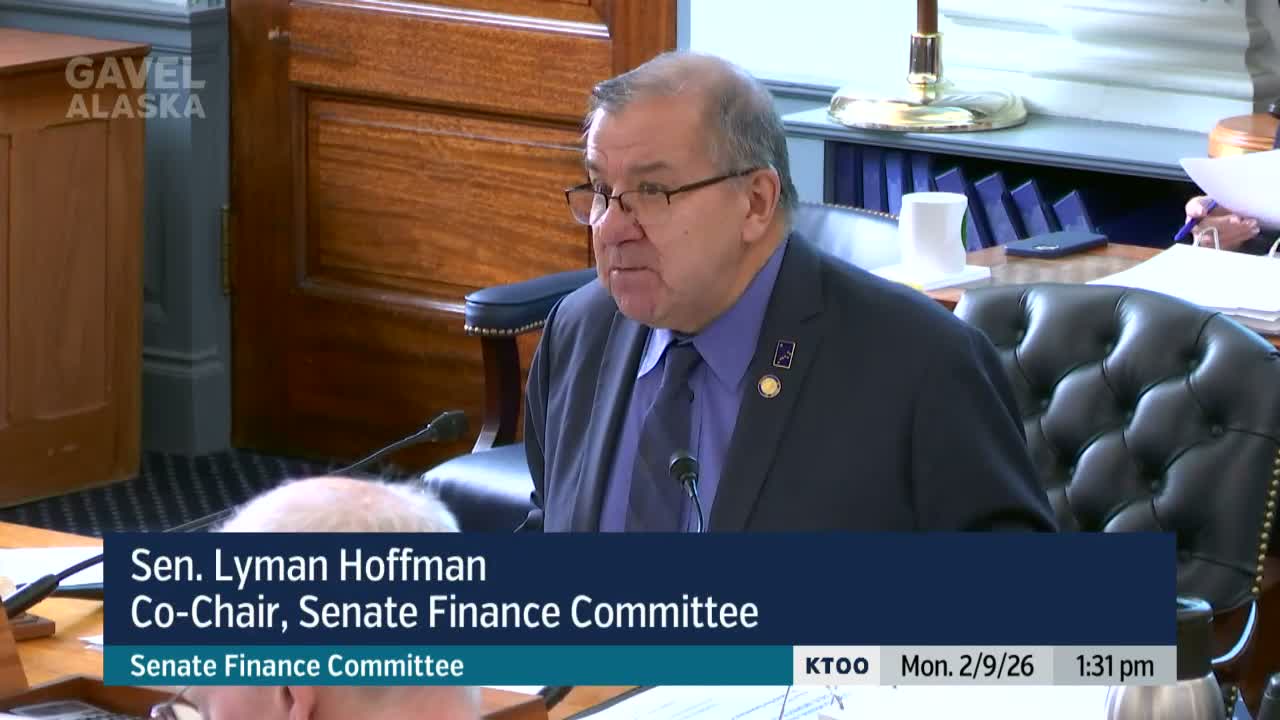
Summary
The Alaska Senate Finance Committee received opening testimony and actuarial analysis on House Bill 78, which would reopen a defined‑benefit retirement option for certain public employees. Sponsor Representative Kopp argued the change would improve retention; the actuary outlined cost mechanics and urged updated data and assumptions.
Representative Kopp told the Senate Finance Committee that House Bill 78 is intended to stabilize Alaska’s public workforce by offering a new defined‑benefit (DB) option for employees now in defined‑contribution (DC) plans. “House Bill 78 does not add $1 to that legacy debt,” Kopp said, distinguishing the bill’s effects on future service costs from the state’s existing, statutorily amortized legacy pension liability.
The bill’s sponsor framed the proposal as a workforce investment to reduce turnover, premium pay and losses from program failures. Kopp cited premium‑pay figures to underscore current costs: the administration’s slide showed roughly $80–83 million in FY20, about $150 million in FY25 and more than $112 million six months into the current fiscal year. He argued HB 78 would lower those operating costs over time by retaining experienced staff.
The committee heard detailed actuarial testimony from David Kershner, principal actuary with Arthur J. Gallagher & Company, who presented the firm’s March 2025 fiscal‑note analysis. Kershner explained the actuarial methodology (normal cost versus past service cost), the statutory constraints that shape employer contributions, and the payroll growth assumption used in the firm’s modeling: “the payroll growth rate used in these figures was 2.75%,” he said. That differs from a 1% payroll growth figure referenced earlier by the sponsor, and senators pressed for updated modeling under more recent assumptions.
Kershner’s slides translated percentage‑of‑pay rates into projected dollar contributions and showed how statutory employer caps — notably the 22% cap that applies to many PERS employers — create ‘‘additional state contributions’’ when DB costs exceed those caps. In Kershner’s FY30 example, the additional state contribution for PERS non‑state employers was shown rising in the analysis toward roughly $120 million in the scenario presented; Kershner said the fiscal note used March 2025 data and that his firm and DRB were discussing updates to incorporate 2025 figures.
Committee members probed multiple implementation issues, including who bears risk if new plan valuations fall short, how DC‑account buy‑ins would be calculated, and how varying opt‑in rates would affect costs. Representative Kopp described an actuarially fair transfer to convert DC account values into DB benefits and said employees would have a six‑month window to choose whether to opt in. He also acknowledged the actuaries had run a conservative 100% opt‑in scenario that yields an estimate of roughly $36–37 million in additional state contributions for certain employers and about $50 million for state employees under that assumption.
Several senators warned about local‑government exposure tied to the 22% statutory cap and recalled prior actuarial controversies. Senator Stedman questioned whether past large infusions materially moved down dollar liabilities and urged updated, granular analyses. Other senators asked for modeling across a range of opt‑in rates and payroll growth scenarios so the committee could see sensitivity to realistic behavior.
No vote was taken. The committee accepted the invited actuarial testimony, asked the sponsor and actuaries to provide updated modeling and dollar‑cost slides, and set the bill aside. Chair Senator Hoffman closed the hearing and said the committee would reconvene with additional testimony and analysis at a later date.