Alaska CoCs say HUD rules, limited housing stock drive homelessness; state needs 27,000 units
Loading...
Summary
Continuum of Care leaders told a Juneau ‘lunch and learn’ that Alaska’s two CoCs manage HUD-mandated systems, and that statewide shortages — an estimated 27,000 units over 10 years and just 36 affordable units for every 100 extremely low‑income households — are the primary driver of homelessness, with overcrowding especially acute in rural communities.
Representative Genevieve Mina convened a Juneau "lunch and learn" where leaders from Alaska’s Continuums of Care outlined how federal rules, limited housing stock and data definitions shape the state’s homeless response.
Presenters described the CoC role as system managers rather than direct operators of all shelters. “HUD divides up the country into 400 different geographic regions. In Alaska, there's 2 of those regions,” a presenter said, explaining CoCs set coordinated-entry policies, manage grant requirements and determine referral and prioritization processes.
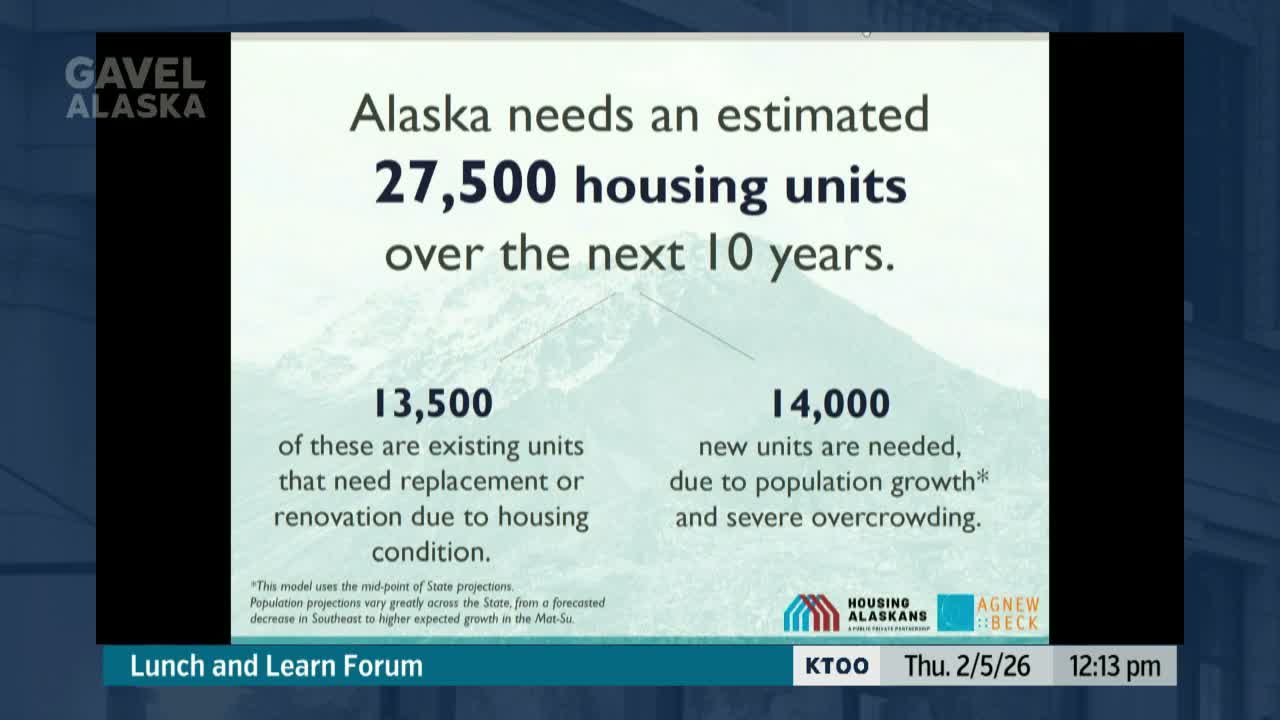
Speakers emphasized the scale of the housing shortfall. “Alaska needs over 27,000 housing units over the next 10 years just to meet the existing need for housing,” a presenter said, adding roughly half of the need is for replacement or renovation rather than purely new construction.
They cautioned that HUD definitions used in federal reporting exclude many doubled‑up or overcrowded households, which understates demand in some communities. The presenters said that, across Alaska, for every 100 extremely low‑income households (0–30% of area median income), there are about 36 available and affordable units, leaving many households housing‑cost burdened and increasing pressure on shelters and short‑term interventions.
Federal funding is centered on the Continuum of Care Grant, which presenters said funds about 30 programs across the state for rental assistance, permanent supportive housing and rapid rehousing. Several federal grants require participation in the HMIS database and adherence to CoC policies, they added.
The presenters pointed to geographic disparities: many rural areas lack year‑round homeless response systems, and some communities report no HUD‑counted homelessness because overcrowding does not meet HUD’s homelessness definition. They said Alaska’s CoCs perform strongly in federal scoring and receive bonus funding, but that performance does not eliminate statewide capacity shortfalls.
The session closed with an offer to share materials and staff follow‑up; presenters encouraged communities to invite CoC staff for local convenings and to use CoC data and public dashboards in advocacy.
The event produced no formal votes or policy actions; presenters encouraged local data collection and advocacy as next steps.