Alaska DPS seeks $1.3 million to sustain body‑worn and in‑car camera operations
Loading...
Summary
Department officials told lawmakers a $1.3 million FY27 increment would cover operating costs for body‑worn and in‑car camera systems (about $680,000 and $653,000 annually, respectively); presenters said video evidence reduces complaint and court time, and the department charges a small fee for record requests.
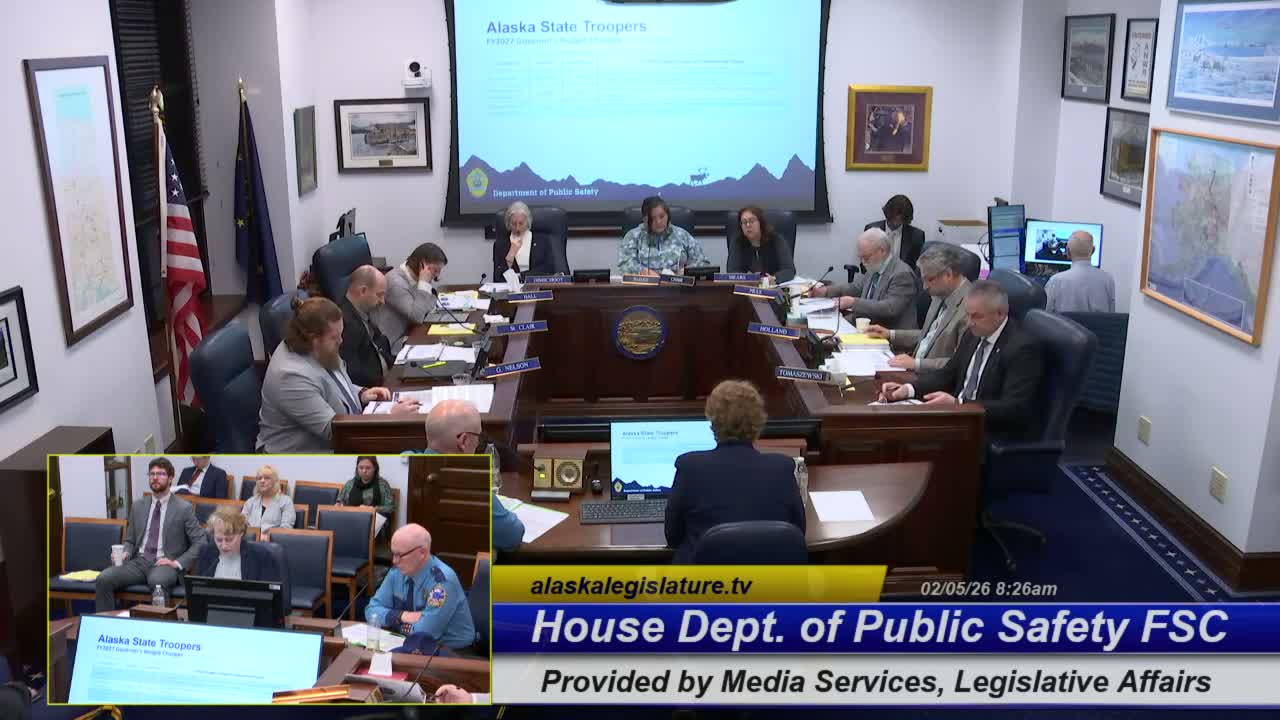
The Alaska Department of Public Safety asked the House subcommittee on Feb. 5 for $1.3 million in unrestricted general funds to sustain ongoing operations for deployed body‑worn cameras and in‑car video systems.
Administrative Services Director Diana Thornton said the annual operating costs are approximately $680,000 for body‑worn cameras and $653,000 for in‑car systems. The $1.3 million increment covers software licensing, secure digital evidence storage, maintenance, technical support and infrastructure required to retain evidentiary video in compliance with legal retention rules. Thornton said the increment does not add cameras or expand the program but ensures the current deployment remains reliable.
Commissioner James Cockrell showed three short departmental videos and emphasized the role of video evidence in both prosecutions and internal oversight. "The point here is the value of evidence... we have to have a body worn cameras for transparency," Cockrell said, telling the committee the video reduced court time and administrative investigations.
Representative Prox raised whether municipalities charge fees for records requests; Thornton and Cockrell said the department charges a small fee to process requests, handled by a unit that manages approximately 10,000 requests each year.
Cockrell described one interdiction shown in the video that led to the seizure of multiple firearms, about 3 grams of heroin, 35 grams of powder fentanyl and more than 1,800 grams of methamphetamine, and said camera and in‑car video helped document the stop and evidence for prosecutors.
Lawmakers did not take a funding vote at the hearing. Department staff said they would provide any requested follow-up materials and continue to brief the committee on operational cost pressures.