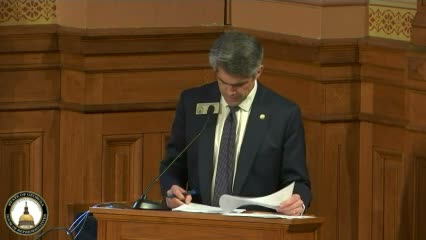
Georgia lawmakers outline sweeping plan to phase in full homestead exemption by 2032
Loading...
Summary
A House package (HR 114 / HB 1116) would phase in larger state homestead exemptions and enable local sales-tax tools to offset property levies; sponsors said the aim is to prevent homeowners being 'taxed out' of their homes while keeping local revenue caps intact. The package will see additional hearings and county-level analyses.
Lawmakers on the Georgia House Ways and Means subcommittee on Monday introduced a package they described as a pathway to eliminate homestead property taxes by 2032 while giving local governments options to offset revenue with sales-tax tools.
Sponsors said the Homestead Opportunity and Market Equalization Act of 2026 (draft LC3969S) would raise the state homestead exemption next year — moving the $2,000 exemption to $10,000 — and then phase additional relief to reach a full homestead exemption by 2032. The package combines a resolution (HR 114) with enabling legislation (HB 1116) that would permit localities to repurpose existing sales-tax “pennies,” offer a new homestead option sales tax, authorize local finance assessments, and require a statewide homestead-exemption database.
Proponents framed the measure as a response to rising housing costs and property-tax burdens. “We cannot let people be taxed out of their homes,” the bill’s presenter said, arguing the plan balances homeowner relief with protections for local services. The plan’s mechanics would not expand the total local sales-tax cap, sponsors said, and would maintain the state sales-tax maximum and local 5¢ ceiling while allowing fractional pennies (0.5%) to be repurposed to roll back homestead taxes.
Committee members pressed sponsors on guardrails and implementation. Representative Trey Kelly asked how the bill would limit local sales-tax increases; sponsors reiterated that the package preserves the current maximums and enables existing pennies to be used for homestead rollback rather than creating new levies. Representatives also discussed how marketplace-facilitator revenue growth — which presenters said had increased local receipts by roughly $3.5 billion — and equalization grants could help address rural counties that may capture less sales tax.
Representative Scott Holcomb requested county-by-county analyses and asked whether the offset revenues would cover existing obligations such as bonds. Sponsors said analyses have been prepared for most counties and that the proposal phases in relief over years to allow replacement revenue streams to stabilize and to address bond and replacement-revenue concerns.
Supporters said the package builds in notification duties and penalties, and includes a database to track homestead exemptions and prevent misuse. The measure also includes a 3% year-over-year revenue cap (excluding new growth) that localities could exceed only by voter approval.
No vote was taken on the substitute; sponsors said they expect multiple follow-up hearings and more detailed drafts and data to be posted for committee review. The subcommittee adjourned and sponsors urged stakeholders to submit technical questions and county-level data ahead of later meetings.