
Lawmakers press RCA on who would shoulder pipeline cost overruns and consumer protections
Get AI-powered insights, summaries, and transcripts
Subscribe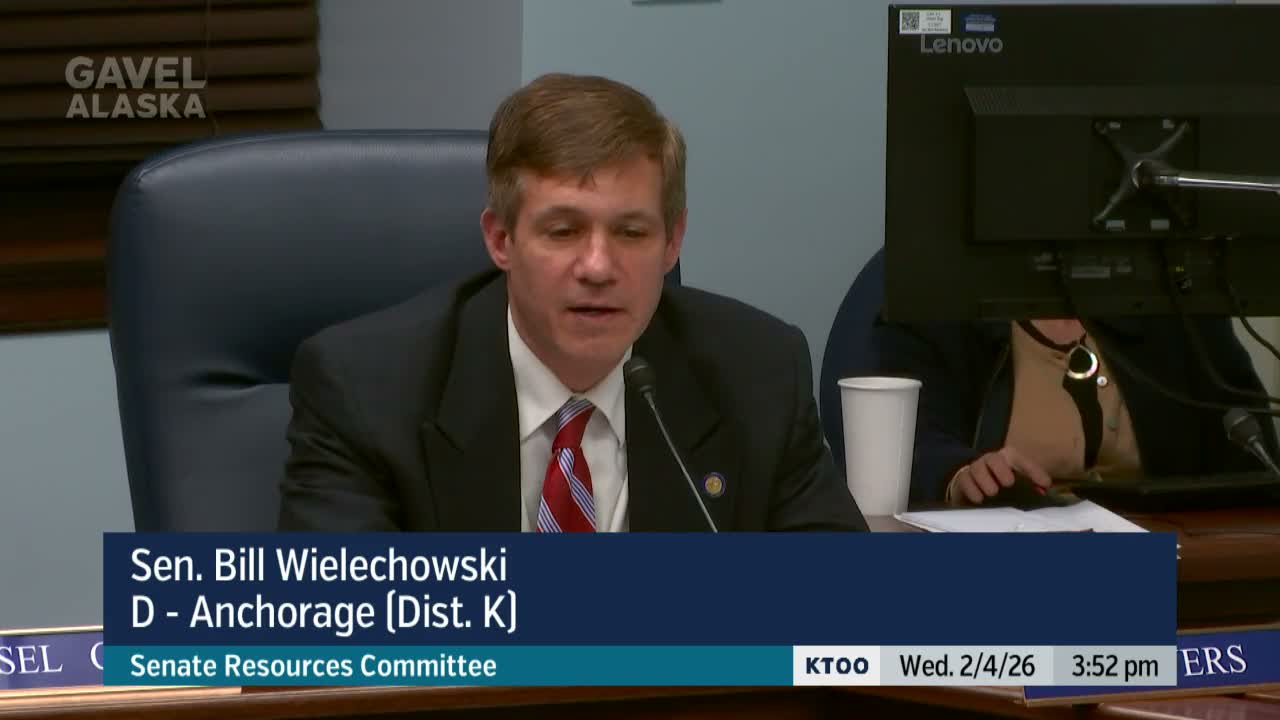
Summary
During the Feb. 4 Senate Research Committee hearing, senators repeatedly asked RCA officials how cost overruns on a proposed in‑state pipeline would be allocated and what safeguards protect Alaska ratepayers; RCA said it will scrutinize prudently incurred costs and that rate‑impact reviews fall under AS 42.05.141(d).
Lawmakers pressed the Regulatory Commission of Alaska (RCA) on Feb. 4 over who would bear cost overruns if a proposed in‑state natural‑gas pipeline proves more expensive than projected.
Senator Wilkowsky raised the budget figure that several speakers had mentioned: "We're hearing the project could cost $10,800,000,000 just just for phase 1," he said. He asked whether cost overruns would simply be passed to utility ratepayers or whether the state or project owners would bear the additional expense.
Commission Chair John Espindola told the committee the RCA’s authority to review gas supply contracts is delineated in AS 42.05.141(d) and that, "when we do review these filings and the rate impacts, we do scrutinize prudently incurred costs." That review authority, Espindola said, gives the RCA a role when ratepayers would be affected by contracts filed by public utilities.
Presenters repeatedly cautioned most outcomes depend on the specific filings the commission receives. Laura Barson said whether costs can be passed to ratepayers depends on the contract terms submitted and the commission’s subsequent review; she noted the statute provides a process to review revised recourse tariffs and to reassess depreciable life and cost elements after construction.
Senators pressed for more detail on who represents consumers in contract negotiations and asked the RCA to involve the Department of Law’s regulatory affairs and public advocacy section when proceedings could affect ratepayers. Espindola said the department is "generally invited to participate" in dockets when the commission suspends a contract or opens a deeper review.
No formal filings or votes occurred at the hearing. Committee members asked the RCA to return with additional materials, including comparable FERC rate guidance and specific documents the commission will use to assess prudency and protect consumers.