
Bill would lock in royalty relief for Kitchen Lights unit as operator and DNR point to increased gas production
Get AI-powered insights, summaries, and transcripts
Subscribe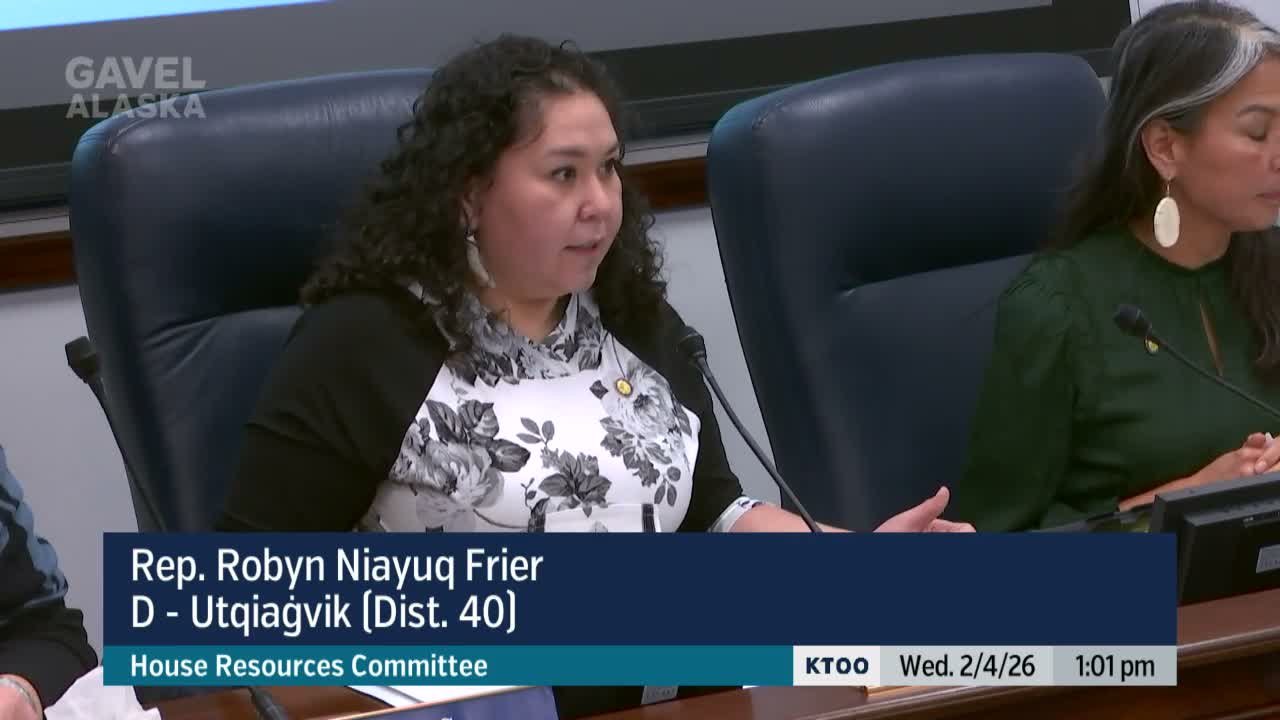
Summary
An introductory hearing on HB 271 examined extending a 3% royalty target for the Kitchen Lights Unit in Cook Inlet; HEX (operator, trading as Fury) and the Department of Natural Resources told the House Resources Committee that targeted relief and DNR modeling coincided with increased investment and recent well outputs, while committee members pressed for documentation and duration details.
An Alaska House Resources Committee hearing on Wednesday reviewed House Bill 271, which would extend a targeted royalty modification for the Kitchen Lights Unit in Cook Inlet aimed at incentivizing investment and prolonging production.
Representative Fields, sponsor of HB 271, told the committee the bill is built on Department of Natural Resources economic modeling and past results that, he said, show targeted royalty relief can increase production. "This bill pertains to royalty rates for the kitchen lights unit in Cook Inlet," Fields said when introducing the measure and asked the committee to consider multi‑year predictability to encourage capital investment in the unit.
The chief commercial officer of HEX (the operator currently legally named Fury), Mark Slaughter, testified in support. "HEX supports HB271," Slaughter said, describing the unit as roughly 84,000 acres offshore in Cook Inlet and noting HEX produces only natural gas there. He told the committee that DNR granted royalty relief in February 2025 and that modification lowered the state's royalty share to 3% for the modified leases and reduced the unit's total effective royalty burden from about 25% to roughly 15.5%.
Slaughter tied that relief to new investment and drilling: he said HEX drilled a sidetrack well in 2024 and, after the DNR decision, renewed its contract for a jack‑up rig and drilled two new wells in spring 2025. "Combined, those 2 wells alone in the past 6 months have produced over 2.1 bcf of gas," he said, and he described a $50 million revolving credit line HEX drew on to support the program.
Committee members pressed for supporting documentation and limits to the proposal. Representative Prox asked that DNR background materials be included in the record; Fields agreed to provide the documents. Representative Meers asked whether statutory sideboards were needed so decisions would not vary by administration; Fields said DNR has statutory authority to issue multiyear royalty relief but that annual revisitation can undermine investor confidence, which the bill seeks to address.
Representatives also raised questions about how long the Kitchen Lights Unit could produce at elevated levels and whether the policy would affect retail prices. Slaughter said DNR projections showed supply through about 2031 but HEX believes additional drilling could extend production into the 2040s; on consumer pricing he said relief "results in more natural gas" but declined to speculate on direct retail price effects. Ryan Fitzpatrick, commercial manager for the Department of Natural Resources, told the committee seller‑specific contract prices were not immediately available and pointed to Department of Revenue weighted averages and the Regulatory Commission of Alaska as the agencies that hold or publish fuller contract and pricing records.
Several members praised the targeted approach while asking whether relief should be broadened beyond Kitchen Lights. Fields said he would research options for other units while noting different overriding royalty burdens across leases could require unit‑by‑unit analysis.
The committee did not vote on HB 271 at the hearing; with questions still outstanding members "set this bill aside," concluding the introductory hearing. The House Resources Committee scheduled its next meeting for Feb. 9, 2026, at 1 p.m.