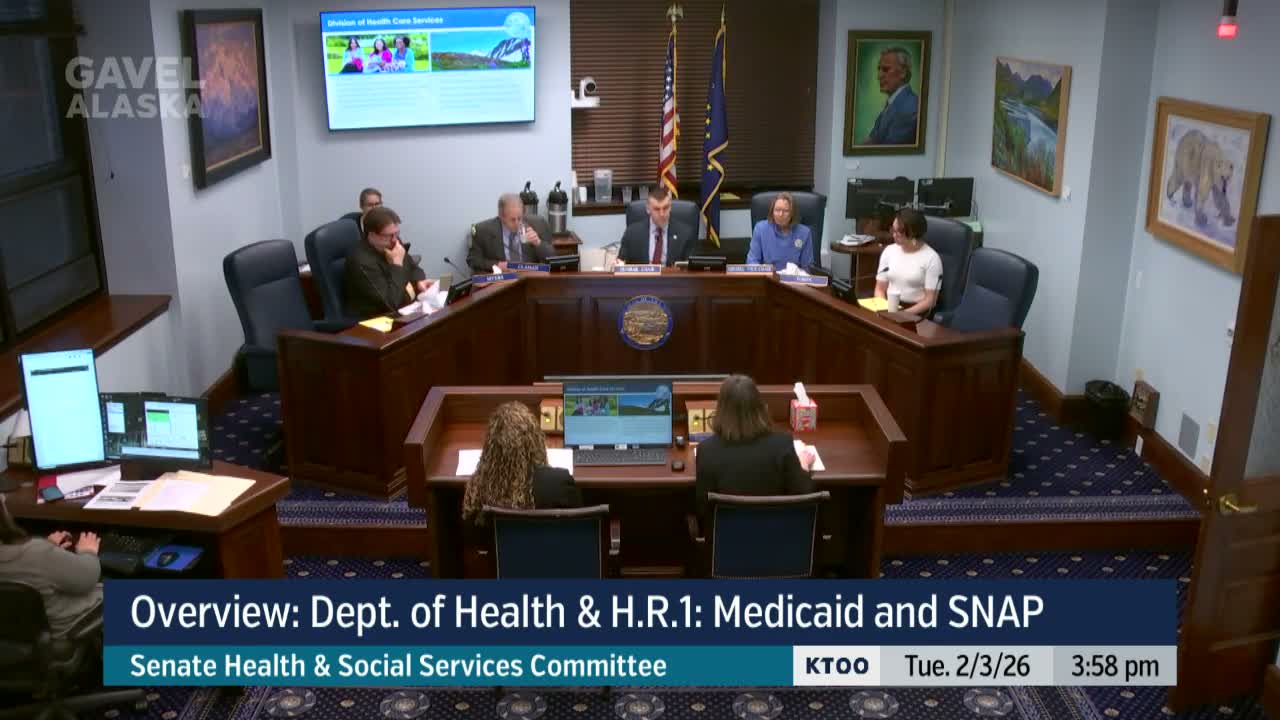
Department of Health details Medicaid IT modernization, provider portals and SNAP processing pilot
Loading...
Summary
State health officials described a multi‑year IT modernization for Medicaid — including a provider enrollment portal, a service authorization portal, a digital Medicaid ID and background‑check improvements — and explained a USDA‑approved SNAP demonstration using contractor staff to support timeliness while state hiring continues.
At a Feb. 3 briefing to the Senate Health and Social Services Committee, Alaska Department of Health officials outlined concrete operational projects aimed at modernizing Medicaid and public‑assistance workflows and improving timeliness.
Deputy Commissioner Emily Ricci said the Division of Health Care Services is implementing a modular modernization strategy that starts with a provider enrollment portal to let providers self‑service, upload documents and track applications. The division also plans a service‑authorization portal (pending CMS approval) and a mobile app to host digital Medicaid ID cards. Ricci said these changes are intended to reduce manual work and allow staff to focus on higher‑value tasks.
Operational metrics and improvements
• Program scale: Ricci described an average weekly Medicaid payment run of roughly $59 million and annual claims processing near 10 million claims.
• Staffing and vacancies: The division reduced a July 2023 vacancy rate of 31% to about 8% as of the month before the hearing.
• Background checks: The division cut provisional background‑check time to just over one business day, a roughly four‑day improvement in processing time.
SNAP processing demonstration and Alaska Connect
Director Deb Etheridge described USDA Food and Nutrition Service approval for a "non‑merit" demonstration that allows contractor staff supplied by Public Consulting Group (PCG) to help the virtual contact center process SNAP cases during a planning/training phase (phase 0). Etheridge said about 10 PCG staff are being trained and that the state received appropriations for 15 additional FTEs to transition processing back to state merit staff over time.
Alaska has also launched the Alaska Connect portal to accept online applications and documents (about 80% of SNAP applications are now submitted online after an earlier rollout). A second phase this spring will let applicants track where their application stands and reduce call center volume, Etheridge said.
Why it matters: Agency leaders said the combined technology and temporary contractor support aims to reduce untimely processing, speed provider participation in Medicaid, and lower administrative friction for clients and providers. Committee members sought assurances the state retains oversight and that the contractor arrangement is a temporary, supervised measure to improve timeliness.