
Alaska officials describe progress on behavioral health reforms and new community clinics
Get AI-powered insights, summaries, and transcripts
Sign Up Free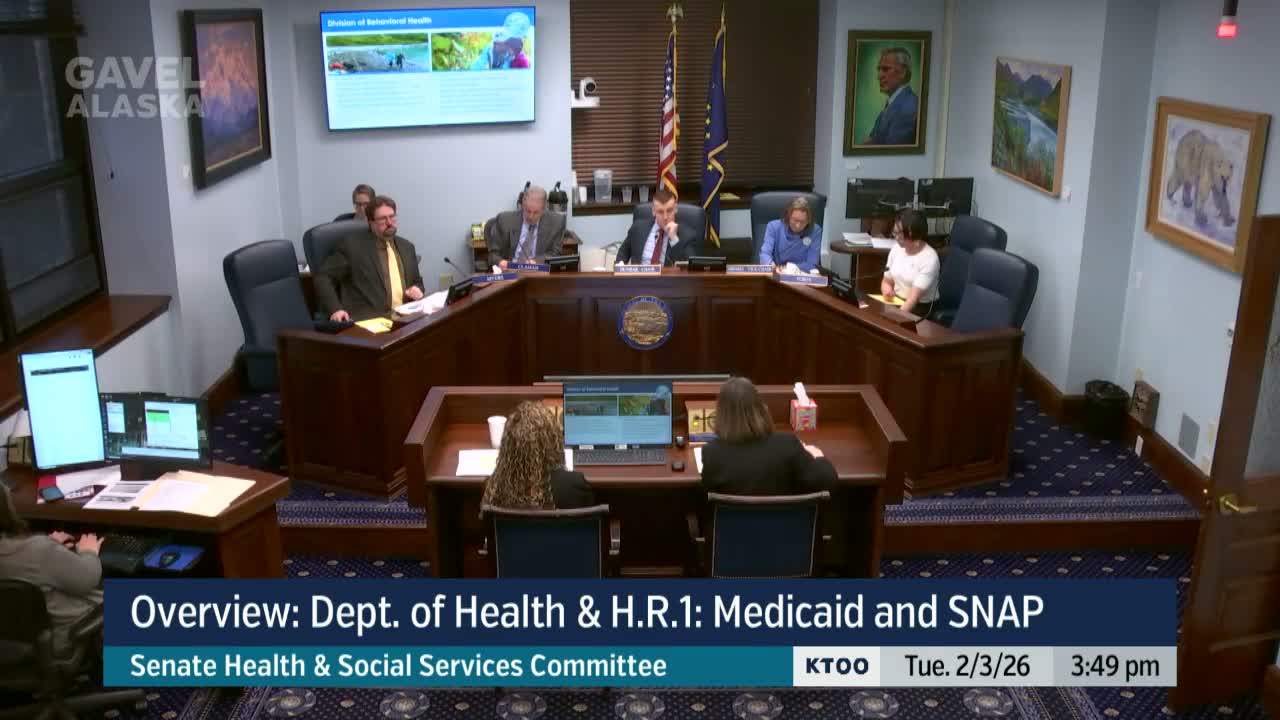
Summary
Department of Health officials told a Senate committee they have completed a behavioral health rate methodology study, plan implementation this year, are pursuing a SAMHSA planning grant for certified community behavioral health clinics, and finalized subacute licensing regulations to expand crisis stabilization and residential services in Anchorage.
Alaska Department of Health leaders told the Senate Health and Social Services Committee on Feb. 3 that the state is moving to implement a series of behavioral health reforms aimed at expanding local capacity and improving outcomes.
Deputy Commissioner Emily Ricci and Division Director Jen Carson said the department completed a behavioral‑health rate methodology study with Guidehouse and will begin implementing recommendations this year. The study examined payment models and crisis‑service rates; staff said Guidehouse engaged crisis providers to ensure recommended rates better reflect providers’ costs.
Why it matters: Ricci said better aligned rates and increased technical assistance should help providers realize the services available under behavioral health waivers and reduce reliance on out‑of‑state placements for youth. "We are starting to see improvements," Ricci said, noting fewer adolescents are going out of state for care.
Planned and ongoing actions
• Certified community behavioral health clinics (CC‑BHCs): The division received a $1,000,000 SAMHSA planning grant and plans to submit an application to join a demonstration cohort beginning July 1; the application is due April 1. If selected, Alaska would begin a five‑year demonstration starting with two organizations.
• Subacute licensing regulations: After three rounds of public comment, the division finalized subacute licensing rules and expects at least two providers to open crisis stabilization and residential services in Anchorage.
• Crisis continuum: The division is developing a full crisis continuum (stabilization, residential, place‑based crisis services) and is working to align reimbursement frameworks to support different community models, particularly outside Anchorage.
• Implementation supports: The department plans to expand technical assistance for billing and claims (to reduce late or unpaid claims) and to use rate updates to address crisis‑service affordability.
Next steps and oversight
Ricci and Carson said they will brief the legislature in more detail, including a scheduled hearing with Guidehouse next week to discuss rate recommendations. The committee recognized the pace of regulatory and operational change and asked for continued updates as implementation proceeds.