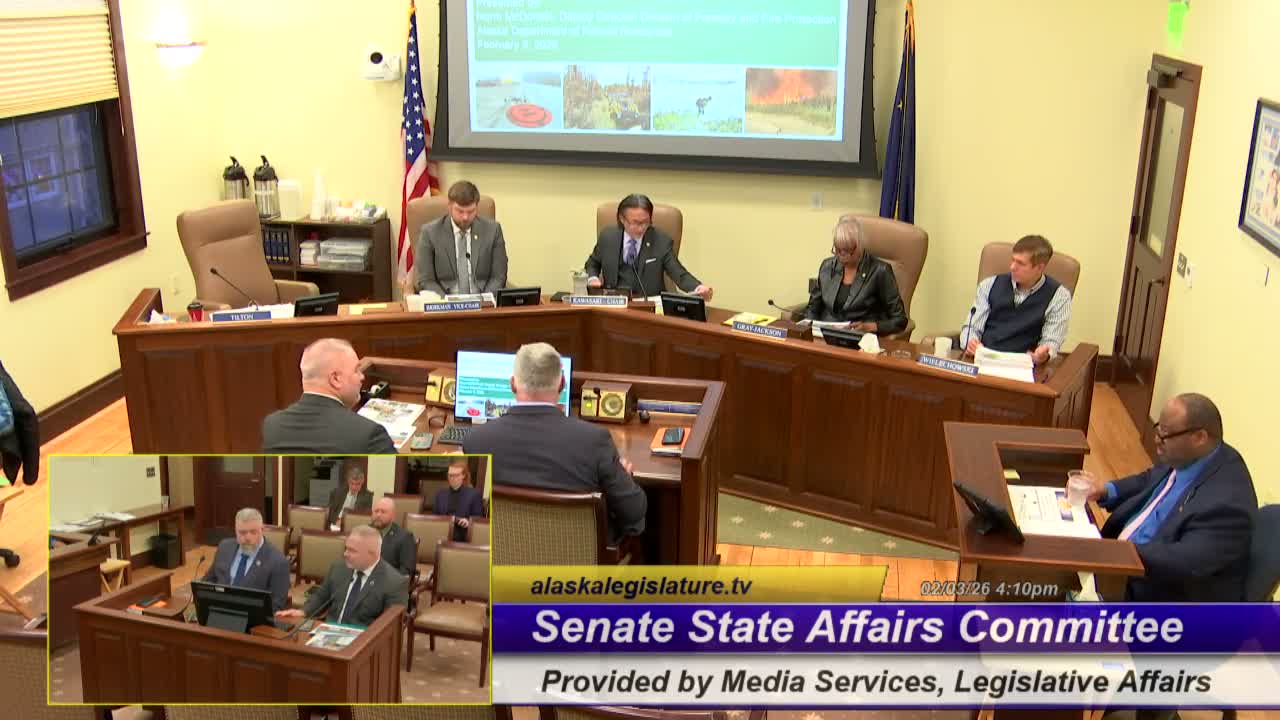
Officials report heavy 2025 fire season, point to fuel breaks and seek supplemental money for suppression
Get AI-powered insights, summaries, and transcripts
SubscribeSummary
Deputy Director Norm McDonald and Deputy Commissioner Brent Goodrum told the Senate State Affairs Committee that the 2025 season stretched resources with a major lightning event and fires near communities, highlighted fuel‑break successes and described a supplemental funding request to address suppression bills from last season.
Deputy Director Norm McDonald of the Division of Forestry and Fire Protection told the Senate State Affairs Committee on Feb. 3 that Alaska’s fire program is organized around four pillars — preparedness, prevention, mitigation (fuels reduction) and suppression — and that the state’s interagency protection model and pre‑season prioritization guide resource allocation.
McDonald reviewed several fuel‑break projects used during the 2025 season, including a 7‑mile Sunset fuel break in the Mat‑Su Valley, a refreshed Murphy Dome fuel break in Fairbanks and a 13‑mile interagency fuel break used on the Funny River Fire. He said the Funny River fuel break and others have demonstrable value in protecting communities; McDonald cited one figure saying roughly $1.7 billion in state homes and assets were protected by such work.
On the 2025 season, McDonald said an intense lightning event produced roughly 55,000 ground strikes and ignited more than 170 fires in a short period, producing a red‑flag event and stretching the state’s initial attack resources. The division recorded about 467 fires that season, burning on the order of one million acres, and responded to several incidents that required evacuations and road closures. McDonald said the state imported around 3,500 firefighters (43 crews), 20 aircraft and thousands of overhead personnel from about 40 jurisdictions to meet demand.
Senators pressed officials on vandalism, dispatch consolidation and budget impacts. McDonald confirmed an investigation into vandalism of engines during the Himalaya Fire and said centralized dispatch out of Palmer performed well after on‑season adjustments. On budget questions, McDonald said the division started the season with what it considered adequate funding but used an emergency declaration when suppression needs exceeded appropriations. Deputy Commissioner Brent Goodrum said the recent supplemental identifies roughly $55 million tied to two emergency declarations (one for $30 million followed by $25 million) and discussed a separate governor request for supplemental funds to address suppression costs; senators and officials discussed the possible use of the constitutional budget reserve to accelerate funding.
Ending: Senators and agency officials agreed to continue follow‑up on supplemental funding, the fire fund balance and final interagency billing for resources sent to Alaska; McDonald emphasized continued investment in fuels reduction and interagency 'all‑lands' collaboration to protect communities going forward.