Get Full Government Meeting Transcripts, Videos, & Alerts Forever!
Get email alerts on the Municipal Budget topic
No spam. Unsubscribe anytime.
Ridgewood council previews $7.47 million capital plan, delays operating‑budget introduction to March 11
Summary
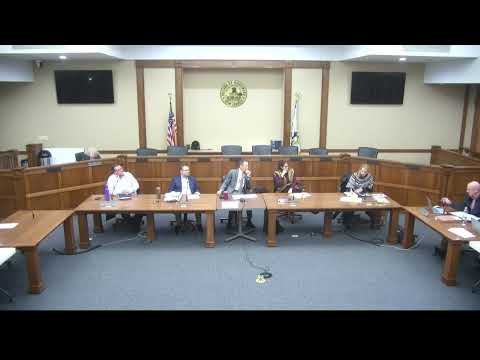
At a Feb. 9 special meeting, the Ridgewood Village Council reviewed a $7,469,500 2026 capital program and agreed to introduce the capital bond ordinance on Feb. 11 while moving the operating‑budget introduction to March 11 to give residents more time to review materials. Staff flagged revenue shortfalls tied to one‑time tax receipts and projected increases in insurance and debt service.
The Ridgewood Village Council on Feb. 9 reviewed a proposed $7,469,500 capital budget and agreed to introduce the bond ordinance for that spending on Feb. 11, while moving the operating‑budget introduction to March 11 to avoid stacking multiple major items on one meeting and to give residents more time to review proposed materials.
Mayor Baguanos told the council he wanted to “bump the introduction of the budget from our February meeting to our March meeting” so the council would not repeat the prior meeting’s late finish when affordable‑housing ordinances were on the same agenda. Staff said capital could still be introduced on Feb. 11 and that the estoppel period would run before projects could proceed.
Why it matters: staff and council members said the change gives administrators more time to finalize revenue estimates and lets the public review a user‑friendly version of the operating budget before a hearing and final adoption. Finance staff cited a revenue gap driven by the loss of certain one‑time receipts and stricter statutory limits on anticipated delinquent‑tax collections.
Staff and council members outlined where the capital money would go. Major items in the draft capital program include:
• Paving and ADA ramps: $2,750,000 for road resurfacing, ramps and curbing, with priority lists set by engineering.
• Traffic safety: $100,000 to fund infrastructure for a traffic signal at Oak and Glen, a location the police have flagged as a high‑accident intersection.
• Fire apparatus: $600,000 toward an engine replacement; council members said prior sinking‑fund allocations and prior capital should reach the $1.2 million purchase price, which has a two‑ to three‑year lead time.
• Hydro‑sewer truck: $370,000 requested for the water pollution control facility; staff said the vehicle clears sewer lines proactively and could be contracted out to neighboring towns if feasible.
• Street sweeper and sign truck: $336,000 (sweeper) and $160,000 (specialized sign truck) to replace aging, mission‑critical fleet equipment.
• Parks and recreation: $268,000 to match a Bergen County open‑space award for Citizens Park (field regrading, fencing, benches and small bleachers), $30,000 match for skate‑park work and $100,000 startup toward the Zabriskie Schedler House history and cultural center.
• Smaller capital items included sewer root control ($20,000), pool discharge pump ($120,000), garage lift replacement ($48,000) and computer replacements ($65,000).
Staff said the capital total — $7,469,500, which includes two appropriations carried from 2025 — aligns with the village’s long‑standing guideline of roughly $7.5 million in annual capital spending. ‘‘That 7.5 number is roughly a rule of thumb,’’ finance staff said, stressing efforts to keep debt service stable over time.
Revenue pressures and appropriations: finance staff warned local revenues are largely flat year‑over‑year and identified several nonrecurring items that helped last year’s balance. About $545,000 of 2025 revenue came from a tax‑sale recovery tied to a property identified in the transcript as “Valley,” and staff said that is not expected to recur. Last year’s delinquent‑tax receipts totaled about $4,000,000; the amount the village was allowed to anticipate for budgeting was roughly $2,300,000, while anticipated delinquent receipts for 2026 are now estimated at $583,000 under statute. On the appropriation side, staff reported salaries and wages up roughly 7% (contractual steps and COLA), group insurance premiums up about 33% and total debt service up about 10% compared with last year.
Public input and council response: resident Denise Lima urged clearer, earlier publication of budget materials and suggested a plain‑language “budget‑friendly” glossary so residents can meaningfully review proposals ahead of hearings. ‘‘I think we need to make sure we bridge the discussions, between the village council and the residents,’’ she said. Council members and staff responded that capital introductions are not final approvals, outlined where specific line items are documented for public review and encouraged residents to consult posted plans and attend hearings.
What’s next: the council intends to introduce the capital bond ordinance on Feb. 11; operating‑budget introduction will occur March 11 with a month‑long period between introduction and adoption as required by law. Staff said they will continue to pursue outstanding grants and FEMA reimbursements to reduce the revenue gap prior to adoption.