Trumbull County educators warn proposed tax-credit changes could strip $6.7 million from local schools
Loading...
Summary
Superintendents and treasurers told Trumbull County commissioners that reconfiguring homestead and owner-occupied property tax credits could reduce county school revenues by about $6.7 million (2024 baseline), with individual districts facing six‑figure losses and the potential for program and staff cuts. Commissioners said they would press state officials for relief.
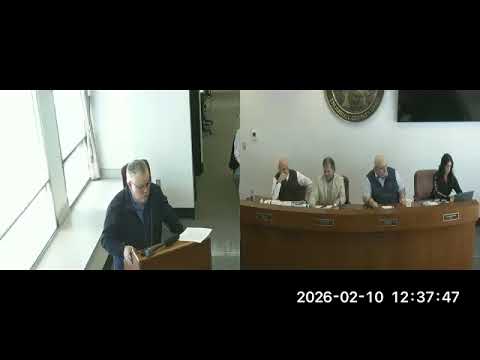
Trumbull County school leaders told county commissioners at a public meeting that proposed changes to owner-occupied and homestead property tax credits could sharply reduce local school funding and force cuts to programs and staff.
"This translates to $6,700,000 in rebates that we would no longer get in rollbacks if this was enacted because the state does not reimburse this," said Terry Armstrong, treasurer of Lakeview Local Schools, summarizing a 2024 auditor data baseline the presenters provided to the board. Armstrong and other treasurers and superintendents urged the county to press the state for reimbursements rather than let districts absorb the loss.
The officials told the commissioners that the countywide figure—derived from the Trumbull County auditor's 2024 tax-year data—would be distributed unevenly among districts. Armstrong said the measure would represent about a $450,000 hit to Lakeview. John Grabowski, superintendent of Champion Local Schools, said the district faces a forecasted $6 million decline in cash balances by 2030 and a one-year loss of about $408,938 if the credits change.
AJ Calderon, superintendent of LaBrae Local Schools, urged caution in local action because state-level reforms (identified in presenters' materials as House Bill 186) already reconfigure nonbusiness and owner-occupied credits through 2029. "We want our message is primarily to proceed with caution," Calderon said, adding that rushing to enact further local changes could "compound the problem" and lead to more frequent levy requests.
Superintendents from Liberty, Howland, Bristol and other districts described a range of district vulnerabilities. Brian Knight of Liberty Local Schools said his district could lose "near $400,000," putting programs and staffing at risk; Kevin Spiker of Howland said Howland's share of the county impact approaches $1 million. Christopher Dre, superintendent of Bristol Local Schools, said the loss would be roughly $127,000 for his smaller district and described how such hits are "backbreaking" for small systems.
Several presenters emphasized that many districts have already trimmed operations. "We are spending 30% less per student than the state average," Lakeview superintendent Ashley Handridge said, adding that a $450,000 reduction would not be "trimming fat" but would cut into "the muscle"—programming, supports and staffing.
Presenters and commissioners also discussed data and legal context in the packet handed to the board. Presenters said the group removed nonbusiness credits from their summary to avoid overstating the exposure and relied on owner-occupied and homestead credits from the auditor's 2024 data. Calderon noted that charts in packet materials indicate House Bill 186 reconfigures credits and that those reconfigured credits in the packet were shown as state-reimbursed in the presenters' copy.
Commissioners responded that the state has shifted funding burdens to local governments and that Trumbull County needs more state and federal support. One commissioner said the state should return a larger share of sales tax dollars and suggested the county and school leaders coordinate with state representatives before taking local action.
No formal policy or vote on the tax-credit changes was taken at the meeting. Commissioners invited follow-up meetings with school officials and pledged to communicate concerns to state lawmakers. The session concluded with a motion to adjourn, which passed by recorded voice votes from Commissioners Hernandez, Malloy and Bernard.
Next steps: commissioners and school officials agreed to continue discussions, ask for more detailed district-by-district breakdowns, and seek interaction with state representatives and the county auditor's office before any local policy change.