
Inglewood council advances eminent-domain resolutions for Transit Connector amid strong business opposition
Get AI-powered insights, summaries, and transcripts
Subscribe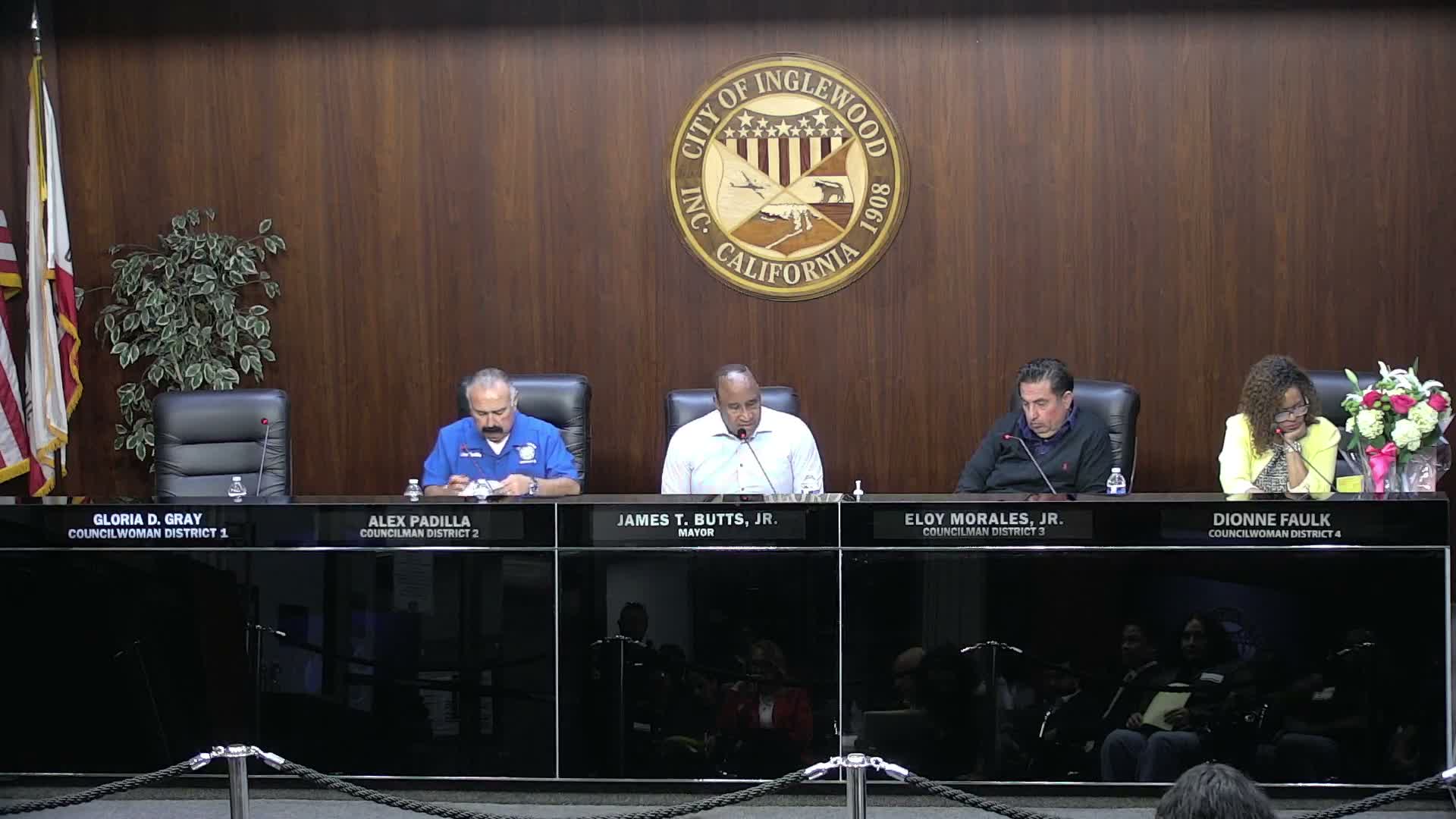
Summary
At a heated public hearing, the Inglewood City Council heard outside counsel and dozens of residents and business owners on proposed resolutions of necessity to acquire properties for the Inglewood Transit Connector mobility hub; opponents argued the city has not met mandatory pre-condemnation requirements and warned of business displacement.
Outside counsel for the city told the Inglewood City Council on the record that staff seeks resolutions of necessity to authorize eminent-domain proceedings to acquire multiple parcels at the Inglewood Shopping Center for the Inglewood Transit Connector (ITC). David Gaylor of Nossaman said written offers and appraisal summaries were provided to property owners and that the city is asking the council to approve the resolutions so staff can move forward if negotiations fail. "We are asking that the council approve the resolutions of necessity so that staff may move forward with the next step in the condemnation process," he said.
The hearing drew extensive public comment from business owners, longtime residents and an attorney representing affected storefronts. Christopher Washington, representing Luxe Gold Salon and Sawan's (Sewan) Jewelers, urged the council to decline the resolution as premature, saying the city "has not made an offer to my clients" and has not satisfied mandatory pre-condemnation steps that Washington said include identifying and appraising property, establishing just-compensation amounts, making an offer and engaging in good‑faith negotiations.
Small-business owners and residents framed the issue as a preservation and equity matter. Amelie Hernandez of Sawan's Jewelers described the proposed acquisition as an "illusion of a beefed up bus line called the iShuttle that already exists," warned of loss of local jobs and customers, and said relocation options are limited. Natalie Matei, Ross Dress for Less’s senior director of real estate, formally objected on behalf of a tenant and requested a continuance, citing shifting project scope and environmental questions; she told the council the proposal to spend about $125,000,000 on property acquisition appeared "wasteful and excessive" given alternatives the retailer had identified.
Supporters of the project said it is a necessary step to connect Market Street businesses with transit and the entertainment district. Odess Riley Jr., a broker and lifelong resident, and property owners such as Deontay Johnson said increased transit connectivity could bring customers and economic resilience to the area.
Council members repeatedly characterized eminent domain as a last resort, emphasized ongoing negotiations and noted that adoption of a resolution does not eliminate the right of owners to continue to negotiate compensation or reach settlements. Staff and the city attorney also incorporated the project's California Environmental Quality Act (CEQA) record into the hearing record. Outside counsel reminded the council that the adoption of resolutions of necessity requires an affirmative two‑thirds vote.
The council moved the consent calendar and later approved a set of consent items by roll call (Padilla, Morales, Fogg and Mayor Butts recorded as voting aye on the listed motions). The transcript does not show a separate recorded roll call specifically resolving each eminent‑domain resolution at the time of the public-comment sequence; the hearing record and public testimony were entered for the council's consideration.
What happens next: The hearing record, staff report and all submitted materials will be part of the administrative record as the council considers whether to adopt the resolutions of necessity. Opponents asked for additional transparency, alternatives analysis and relocation planning before the council takes any final step to authorize condemnation.