Get Full Government Meeting Transcripts, Videos, & Alerts Forever!
Get email alerts on the Land Use Regulatory topic
No spam. Unsubscribe anytime.
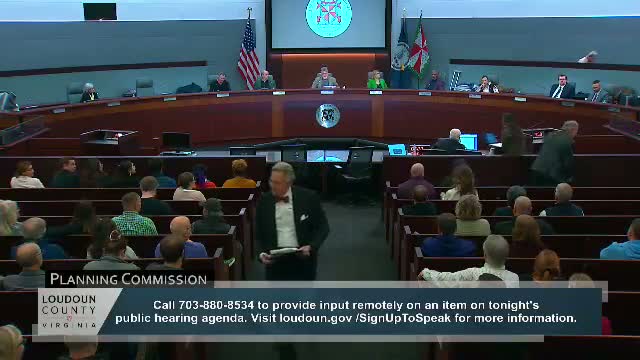
After hours of testimony, Planning Commission sends Happy Paws kennel application to work session
Summary
The commission heard hours of public comment Dec. 18 on Happy Paws Canine’s request for special exceptions to allow an in‑home kennel with an increased dog capacity and reduced setbacks; staff could not support a recommendation as submitted and commissioners voted 9–0 to send the matter to a work session for more data on scale, trip generation, health and setbacks.
Diana Ethvong of Loudoun County staff opened the special‑exception presentation for Happy Paws Canine, a family‑run in‑home kennel in the AR‑1 rural area in Leesburg. Staff said the applicant sought a special exception to permit up to 35 dogs (exclusive of family pets) plus minor special exception reductions to the 100‑foot use setback on three property lines. "At this time, staff cannot support a commission recommendation to the Board," Ethvong said, and recommended forwarding the application to a work session to address outstanding issues including scale, setbacks and public‑health or operational mitigations.
Applicant counsel Anna Ritter said the owners proposed to reduce their requested capacity and were willing to accept a maximum capacity of 30 dogs for the kennel use (exclusive of family pets) and to limit the number outside at one time; Ritter said the owners would accept conditions and are open to discussing ownership/occupancy restrictions and time limits. "We are committing to a maximum capacity of 30 dogs," Ritter told the commission.
Public comment stretched for hours and split strongly. Supporters — many of them long‑time clients, first responders and neighbors — described close supervision, daily photo updates, training and veterinary oversight, and argued the facility is clean and well‑managed. Dozens of supporters said the operation provides critical, flexible care for working families and first responders.
Opponents described traffic safety problems (customers speeding and conflicts at a nearby school‑bus stop), hours of heavy driveway use, assert that code violations and citations have occurred, and raised concerns about noise, fecal waste management and potential pathogen runoff. Several speakers asked the commission to deny the application or to limit scale to a much smaller number (some suggested figures comparable to in‑home child‑care rules, e.g., 12) or require a time‑limited special exception.
Commissioner Jasper moved that the commission forward the application to the Board with a recommendation of denial on incompatibility grounds; that motion prompted a substitute by Commissioner Myers to send the application to a Planning Commission work session to gather additional technical data (trip counts, noise testing, septic/drainfield confirmation, stricter setback alternatives and possible time limits). The substitute motion passed unanimously, 9–0.
What’s next: The commission directed staff and the applicant to bring additional data and reduced‑scale options to a work session; the Board of Supervisors will see any subsequent recommendation after further Commission action.