Get Full Government Meeting Transcripts, Videos, & Alerts Forever!
Get email alerts on the Religious Liberty topic
No spam. Unsubscribe anytime.
Debate in committee over religious-liberty bills centers on public-health exceptions and sweeping language
Summary
Sponsors said HB 1778 and HB 2760 clarify and protect religious exercise from orders that would prohibit or limit worship, citing COVID-era restrictions, while opponents and some members warned the language could tie public-health officials’ hands during serious outbreaks and raised concerns about vague definitions and fiscal/legal exposure.
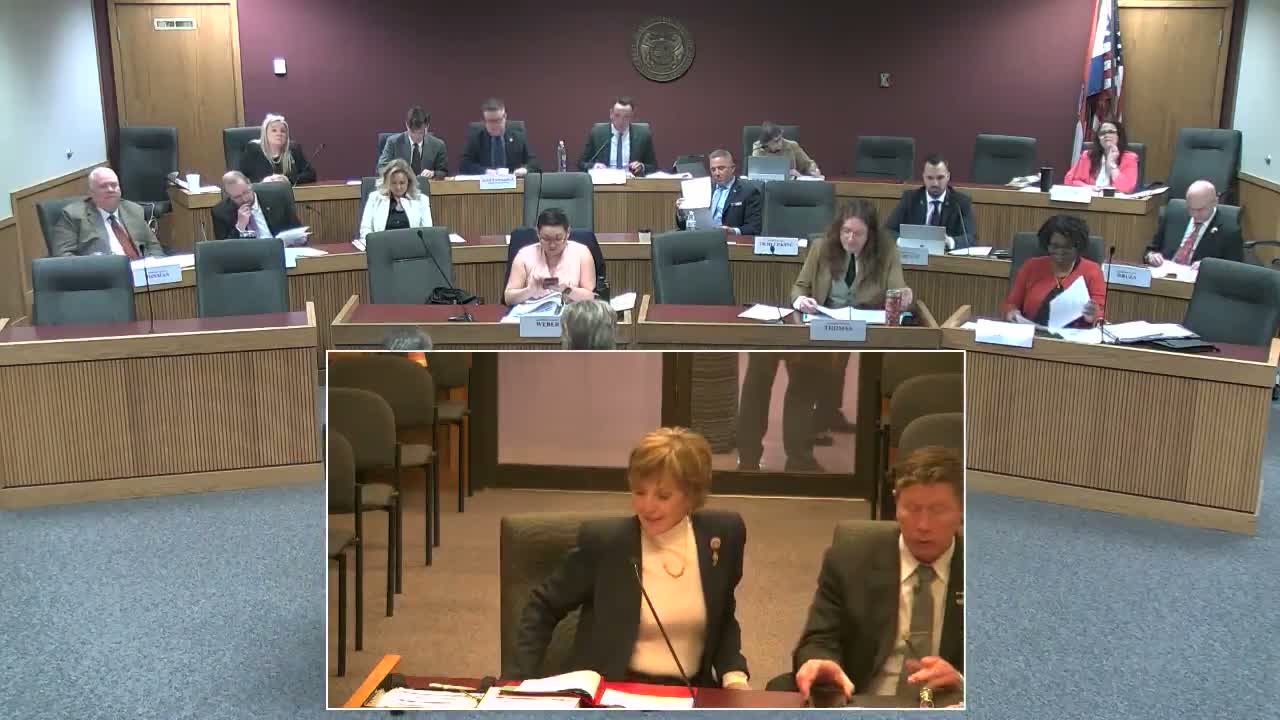
Representatives Kathy Jill Loy and Sean Boucher presented two religious-liberty measures — House Bill 1778 (titled in testimony the Missouri Religious Freedom Protection Act) and HB 2760 (referred to as the Praise Act) — saying the bills clarify constitutional protections and prevent public officials from issuing orders that prohibit or limit religious services. Loy said the bills are "about making sure that never happens again" after COVID-era restrictions and described faith communities as providers of counseling, recovery services and other social supports.
Lawmakers pressed sponsors on public-health scenarios that might require nondiscriminatory restrictions, asking whether the bills would hamper responses to highly lethal or highly transmissible diseases (members raised Ebola and airborne-disease hypotheticals). Representative Frizza asked for nondiscriminatory language and cautioned against precluding emergency measures when warranted; sponsors replied the bills permit health warnings and expect faith communities to exercise judgment while stressing the measures aim to prevent arbitrary or discriminatory orders.
Members also asked about definitions. Representative Thomas questioned whether the broad statutory definition of "place of worship" could sweep in nontraditional venues or make public buildings subject to challenges. Sponsors acknowledged potential ambiguities and recommended combining or refining the bills to avoid misapplication.
Witnesses were split. Pastor Bridal Kaler testified in opposition, warning the bills would "make our communities less safe by tying the arms of public health officials" and arguing that mass-gathering rules should be applied consistently across secular and religious events; he urged the committee to vote against both measures. Other members referenced court precedents (including litigation involving California churches) to note that courts have at times upheld restrictions when rules were applied uniformly to all mass gatherings and struck them down when restrictions targeted religion.
Members also discussed potential fiscal exposure: during questioning a fiscal or oversight figure was cited as a possible liability amount (members referenced both a recurring legal-cost estimate around $250,000 a year and an oversight figure approximated in committee discussion near $2,027,060), which sponsors and members said arose from possible litigation if state orders were challenged successfully.
The committee concluded public testimony and adjourned; members suggested language changes or combining the bills before any further action.