Get Full Government Meeting Transcripts, Videos, & Alerts Forever!
Get email alerts on the Housing Affordability topic
No spam. Unsubscribe anytime.
County ad hoc committee outlines tiny‑homes white paper; supervisors weigh feasibility
Summary
An ADWOB ad hoc committee presented a tiny‑homes white paper exploring definitions, financing models, case studies and hypothetical Ashburn pilot options; supervisors raised questions about local demand, land costs, infrastructure and zoning changes needed for viable tiny‑home communities.
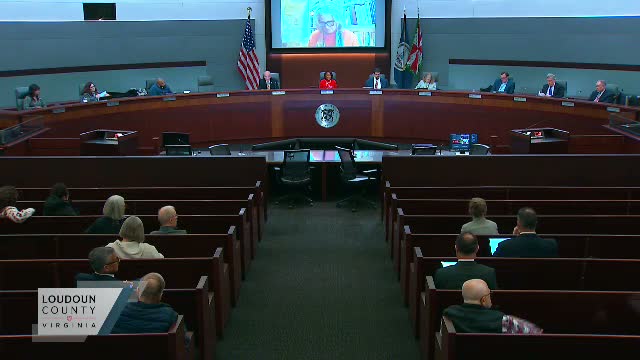
Staff from the Affordable Dwelling Unit Advisory Board (ADWOB) presented a white paper on tiny homes to the Board on Dec. 2, detailing different models (mobile vs. permanent), tenure options (rental, homeownership, transitional), financing approaches (personal loans, land‑trust models, philanthropic grants) and national case studies.
ADWOB staff said a realistic homeownership tiny‑home development in Loudoun would require reduced or donated land to reach attainable prices and estimated unit construction costs (excluding land) around $125,000–$150,000. The committee modeled hypothetical layouts on the former Ashburn North Park‑and‑Ride site showing configurations between roughly 57 and 84 units and pro forma cost scenarios.
Supervisors probed market demand in Loudoun, water and sewer feasibility, and whether developer or non‑profit partners (for example Habitat affiliates) would be willing to build under land‑trust or subsidy models. Some supervisors urged pilot projects and land‑leasing experiments; others said the market for tiny units may be limited without ongoing land subsidies or zoning changes. ADWOB staff recommended further outreach to developers and nonprofits and flagged the need for carefully selected sites with adequate utilities and transit access.
Per ADWOB, transitional tiny‑home clusters have been successful elsewhere when paired with supportive services and nonprofits, but the white paper emphasized that tiny homes are a toolbox item — not a single solution to countywide affordability gaps.