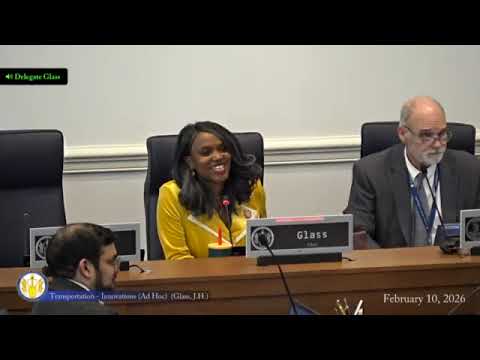
Subcommittee advances guardrails for automated enforcement, moves related bills forward
Loading...
Summary
The Transportation Innovation Subcommittee advanced a package of bills that would set standards for automated traffic enforcement in Virginia — requiring worker presence in work zones, calibration and data-retention rules, signage, and limits on how citation revenue is used — while local governments pressed concerns about a sovereign-immunity waiver.
Delegate Delaney presented a substitute aimed at imposing stronger guardrails on automated traffic enforcement that the subcommittee advanced Tuesday. The measure would require a worker to be physically present in work zones before a camera-issued citation may be issued, require proof of device calibration if a citation is contested, limit public retention of automated-enforcement revenue to a locally controlled fund dedicated to traffic improvements, and specify data-retention and warning-period rules.
"It requires that workers must be physically present in a work zone in order for a citation to be issued," Delaney said while outlining the substitute, explaining the provision responds to past court decisions and aims to safeguard due process. The substitute also directs the Supreme Court of Virginia to develop a uniform summons for camera-issued citations and requires that vendors and operating agencies post contesting procedures and conspicuous signage near camera sites.
Why it matters: Sponsors and many safety advocates told the subcommittee that automated tools can reduce dangerous driving and improve accessibility when used with checks on abuse. Delaney cited a 2025 crime-commission study that identified due-process and revenue-use concerns and said the substitute is intended to ensure the technology "persists in the commonwealth" only if used responsibly.
Local governments objected to a single provision: several municipal and county representatives said the bill’s current waiver of sovereign immunity goes too far. "We support many of the components of the bill and are doing that in Suffolk already," Mindy Carlin of the city of Suffolk said, "but we have concerns about the sovereign immunity clause and hope we can continue to work on that." Mitchell Smiley of the Virginia Municipal League and James Hudson of the Virginia Association of Counties made similar objections.
What the committee did: After testimony from transit, disability, safety and municipal witnesses, the subcommittee moved to report Delaney’s substitute. The clerk recorded HB 1220 as reported as substituted by the subcommittee (roll recorded in the hearing transcript).
Details and safeguards in the substitute: - Worker presence: citations tied to work-zone protection require a worker on site before a summons can be issued. - Revenue use: localities may retain funds collected from citations, but any amounts beyond implementation costs must be placed in a local fund used solely for traffic improvements. - Due process: a uniform summons will be developed, citations must explain how to contest, and proof of device calibration must be available in contested cases. - Data and signage: devices must retain collected data for 21 days (or until final disposition) and new devices must run a 30-day warning period before issuing summonses; agencies must post conspicuous signs within 1,000 feet of cameras.
Remaining friction points: Municipal officials repeatedly urged changes to the sovereign-immunity waiver so local governments retain defensive options if litigation occurs; Delaney said the waiver responds to case law that has left citizens without clear accountability when vendors and localities each claim immunity. The committee and stakeholders signaled continued negotiation on that provision before final passage.
Next steps: The bill was reported to the full committee with the substitute language; committee members and stakeholders indicated they will continue to negotiate sovereign-immunity language and other technical fixes ahead of full-committee consideration.